
The reigning country queen talks about singing “Mammas Don’t Let Your Babies Grow Up to Be Cowboys” as a little girl on her family’s front porch—and at Willie’s all-star ninetieth-birthday show.
By John Spong
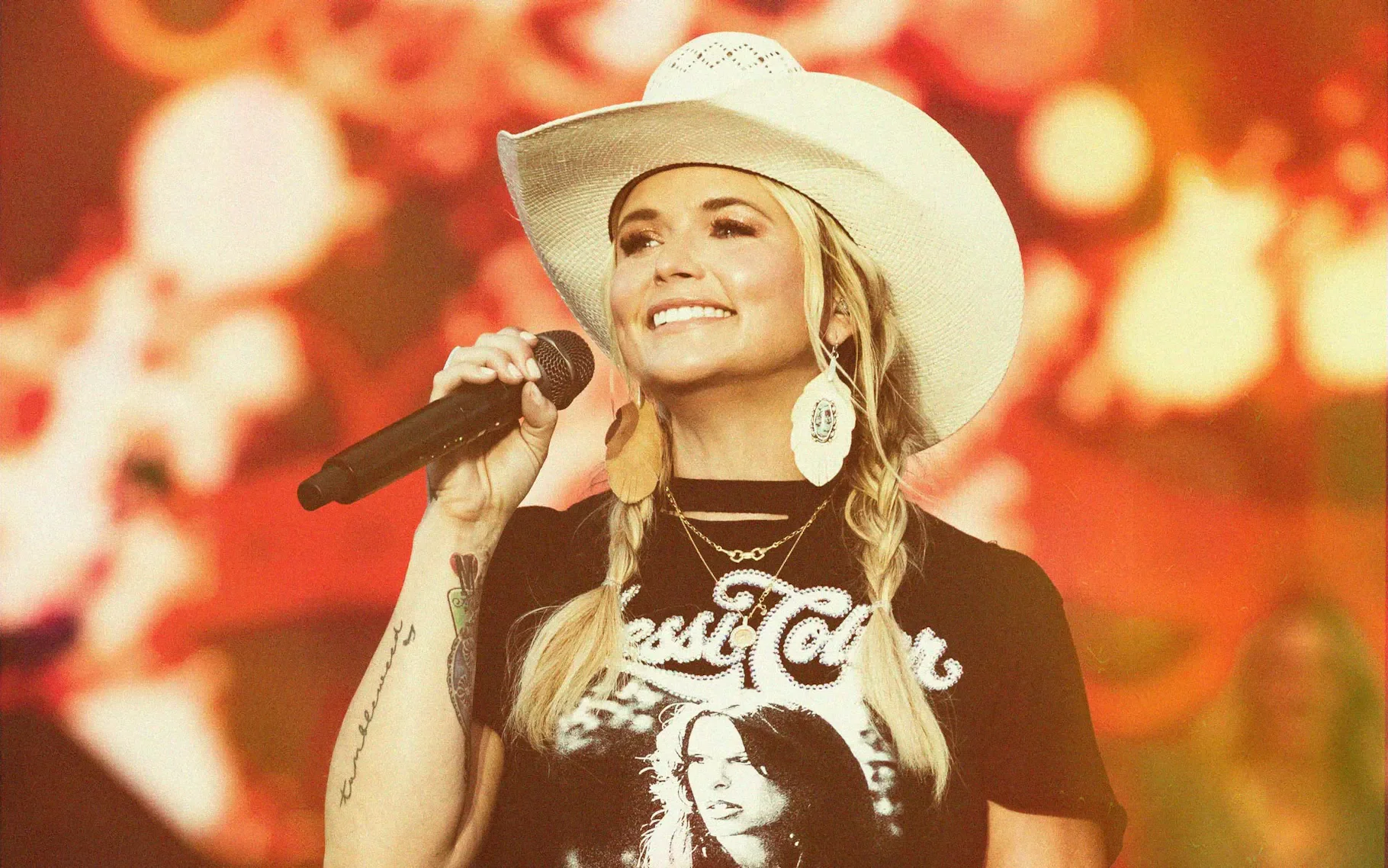
Miranda Lambert. (Photo courtesy of Miranda Lambert.)
Miranda Lambert can’t remember a time when she didn’t know the song “Mammas Don’t Let Your Babies Grow Up to Be Cowboys.” The Willie and Waylon duet, a Grammy-winning, number one country hit in 1978, was already an outlaw anthem well before Lambert was even born. But when she was a little girl growing up in tiny Lindale, money was tight and life precarious. Listening to country music—and playing and singing great country songs with friends and neighbors on the Lambert front porch—was a key to her family’s survival. Those kinds of get-togethers are also, Lambert explains, a crucial component of country music history.
This week on One by Willie, Lambert goes deep on the art of the pickin’ party, describing the first time a song ever made her want to cry, when she was just seven years old. From there, we discuss two of the all-time great pickin’ party records, Willie’s Somewhere Over the Rainbow and Lambert’s own Grammy-nominated collaboration with her friends Jack Ingram and Jon Randall, The Marfa Tapes; the overwhelming feeling of love at Willie’s star-studded ninetieth-birthday shows, held in 2023 at the Hollywood Bowl; and the debt Lambert feels every country artist owes to her hero, Willie Nelson.
One by Willie is produced by John Spong and PRX, in partnership with Texas Monthly. The PRX production team is Jocelyn Gonzales, Patrick Grant, Pedro Rafael Rosado, and project manager Edwin Ochoa. The Texas Monthly team is engineer Brian Standefer, producer Patrick Michels, and executive producer Megan Creydt, with graphic design by Emily Kimbro and Victoria Millner. And Dominic Welhouse provides invaluable research and editing help.
Transcript
John Spong (voice-over): Hey there, I’m John Spong, and this is One by Willie, a podcast in which I talk each week to one notable Willie Nelson fan about one Willie song that they really love. The show is produced and distributed by PRX, and we are brought to you by Still Austin craft whiskey, with additional generous support from Tecovas boots.
This week, we talk to the reigning queen of country music, Miranda Lambert, about the song she sang at Willie’s all-star ninetieth-birthday bash at the Hollywood Bowl back in 2023, “Mammas Don’t Let Your Babies Grow Up to Be Cowboys.” It’s an outlaw-country anthem now, but of course, it got there by being a number one hit for Willie and Waylon in 1978, well before Miranda was even born. In any event, it’s one of those songs she simply can’t remember not knowing. She figures she probably first heard it before she could even walk, when her dad played it at a pickin’ party on the family’s front porch.
Well, that’s a memory that gets her thinking not just about the way country music kept her family together during some dire financial times, but also the essential role that pickin’ parties have always played in Willie’s career, her career, and country music more generally. Which, in turn, leads us to the first song that ever made her feel like crying, an old Lambert family pickup truck named Bessie, and two quintessential pickin’ party albums, Willie’s Somewhere Over the Rainbow and Miranda’s own collaboration with Jack Ingram and Jon Randall, The Marfa Tapes.
So let’s do it.
John Spong: Well then, yeah, Miranda Lambert. What’s so cool about “Mammas Don’t Let Your Babies Grow Up to Be Cowboys”?
Miranda Lambert: Man, what a story that is. I feel like it is one of those songs that I hear it differently every time I hear it—still, to me. It’s just, it’s such a message. And I actually sang it this weekend at Whitewater Amphitheater, where we were playing, and I did it with Calder Allen and Wade Bowen. And just seeing the crowd and what that song—like, the way that song hits people, seeing the crowd just sway their arms and sing it so loud. Because cowboys have this reputation, because they don’t stick around long . . .
John Spong: Because they earned this reputation.
Miranda Lambert: Exactly. But it’s the allure of that bad boy that we all want, and I feel like this song said it perfectly.
John Spong: That’s awesome. That’s awesome. Because yeah, it did. It became something of an anthem for us down here, right?
Miranda Lambert: Yeah, absolutely.
John Spong: Yeah. Do you know much about the dude who wrote it, about Ed Bruce?
Miranda Lambert: I don’t.
John Spong: Well, one of the wonderful things that I learned is that he initially wrote it—he wrote it in 1975, and so originally, he was writing about being a frustrated, struggling songwriter and not being able to make any money in Nashville and get any cuts. And so he wrote it, but it was “Mammas [Don’t] Let Your Babies Grow Up to Pick Guitars.”
Miranda Lambert: Oh, I didn’t realize that.
John Spong: Yeah. And his wife was his manager, and she said, “That’s all true. That’s a great sentiment, and it sums up where you are right now. Why don’t we make it, ‘Don’t Let ‘Em Grow Up to Be Cowboys.’ I think we might have something here, if you’ll shift that.”
Miranda Lambert: Of course. Leave it to the lady to fix it.
John Spong: Exactly. Yeah. Well, precisely.
Miranda Lambert: What’s funny is that my agent, who’s been my agent since I was seventeen, Joey Lee, he’s married to Ed Bruce’s daughter.
John Spong: Oh really?
Miranda Lambert: Yes. Which is so random.
John Spong: But that’s the way Nashville and country music works. Right? Everybody’s related—
Miranda Lambert: Exactly.
John Spong: They’re cousins or married or in-laws or something.
Miranda Lambert: Yeah.
John Spong: That’s wild. Yeah.
Miranda Lambert: I mean, my agent’s my longest male relationship besides blood family, so I don’t know what that says about me.
John Spong: Sounds like you’ve run off a great many people.
Miranda Lambert: Yeah, I think I just—I ran off with the circus, is what I did, which is something this song also kind of touches on.
John Spong: There we go. Well then, what a perfect setup. Let’s listen to “Mammas Don’t Let Your Babies Grow Up to Be Cowboys.”
[Willie Nelson performing “Mammas Don’t Let Your Babies Grow Up to Be Cowboys”]
Miranda Lambert: I love it so much.
John Spong: Yeah.
Miranda Lambert: It’s so good. It makes me want to be a cowboy, real bad. In my next life.
John Spong: Are there lines in there that leap out at you?
Miranda Lambert: I love that they made him soft. He loves “little warm puppies.” You know what I mean? Those tender moments in the song. I love that.
John Spong: That’s awesome. Because that very line stuck out to me as a Miranda line, in part because it goes on and says, “Little warm puppies and children / And girls of the night.” It’s also got the complete dark side of country music.
Miranda Lambert: It sure does. But it explains it, all the sides of him, in one line.
John Spong: Yeah. Yeah.
Miranda Lambert: That’s awesome. I love it.
John Spong: There was another line in the original version, in Ed Bruce’s version. He sings, “Budweiser buckles and soft faded Wranglers,” which wouldn’t quite—I get it: Willie or Waylon, one [of them], said, “Nah, at least we have to make it a Lone Star.”
Miranda Lambert: I love—well, of course. Well, Texans have to say “Texas” somehow.
John Spong: Right. Gonna get it in there.
Miranda Lambert: That’s just what we do.
John Spong: But also, this is capitalizing on the outlaw moment. They’ve just had—this was on Waylon & Willie, the first duets album, and they had made Wanted! The Outlaws before to capitalize on the . . . RCA had wanted ’em to do it to capitalize on the success of Red Headed Stranger and Honky Tonk Heroes, and all these revolutionary albums they’d made. But then, those two albums, they’re kind of studio concoctions. I mean, there’s no Trigger—
Miranda Lambert: Yeah.
John Spong: —on this song at all, but there’s such great Ralph Mooney steel. It doesn’t lack for it, but it’s just weird to me that the records they made that revolutionized music are not necessarily the ones that popularized them and became the anthems, like this.
Miranda Lambert: But I guess that’s what made everybody dig in harder and go back, you know?
John Spong: And go back, yeah.
Miranda Lambert: And, I mean, I also love that they just all sang together. And made records together. And cut each other’s songs. And I feel like we don’t do that as much. I think Texans do. Like Randy [Rogers] and Wade, they keep that alive. And singing this weekend with Wade and Calder Allen. And Jake Worthington opened. Adam Hood. And we just got up there and did the covers we wanted for fun, and just, and Jack—Jon Randall and Jack Ingram came, and we kind of just . . .
John Spong: Oh s—, that’s everybody. It’s the whole thing.
Miranda Lambert: It’s everybody! It’s all my people. And we just sang covers and enjoyed it. And I feel like that’s what this music was, and that’s what I want to help get back to. I want to be part of the movement that keeps that alive. With—we started Big Loud Texas, our label down here, for that reason. But Willie and Waylon are the reason that we need to keep that going. Because think about how—not just country music—this music influenced all genres of music. I mean everybody, I don’t care where you are in the world, you say “Willie Nelson”—people know.
John Spong: Yeah.
Miranda Lambert: You know what I mean?
John Spong: Yeah. Tell me more about how they influenced—because it’s more than just that they know. They know—they hear him, they know who he is, but they know songs, too. There’s things—and they usually have a close memory associated with the song. The songs are part of our lives.
Miranda Lambert: They are part of our lives. And they’re like little stamps. I mean, I don’t know. One of my other favorite songs is “Last Thing I Needed First Thing…” I mean, what a song. But there’s so many. You can’t—I mean, you have a whole podcast digging into it because it’s that much. You know what I mean?
[Willie Nelson performing “Mammas Don’t Let Your Babies Grow Up to Be Cowboys”]
John Spong: So this song predates you. It was here before you were. So by the time you would’ve heard it, it was already an anthem. But when would you have heard it first? Any idea? Or what Willie grabbed you first?
Miranda Lambert: Probably before I could even walk. I mean, my dad plays guitar and writes songs, and there was always music playing in our house, and he had a record player. And so my dad’s been covering Willie’s songs forever. I don’t remember a time that it wasn’t in my life, you know what I mean? Because I grew up on Willie and Waylon and [John] Prine and David Allan Coe and Guy Clark. That’s just kinda what was playing at our house. Ray Wylie [Hubbard].
John Spong: Oh, wow.
Miranda Lambert: That was the first music that I was introduced to.
John Spong: And talk about that, because it’s—music mattered in your household, and specifically country music. Just what did country music mean to your family?
Miranda Lambert: I mean, it’s everything. It just—my mom loves music. My dad is a singer-songwriter. My dad was a narcotics officer in [the] Dallas Police Department, and he had a band on the side, a cover band called Contraband, of course.
John Spong: Of course.
Miranda Lambert: And they played country music.
John Spong: Yeah.
Miranda Lambert: So I think, just, it was sort of in our home. It was in our hearts. I just—I’m lucky that way. People say, “You started so early.” It’s like, “But I’ve had music in my life so early that there wasn’t really another option.” It just was, “I have to do this because it’s the way that I grew up.” And also, being from a state that this kind of music is born from—
John Spong: Yeah.
Miranda Lambert: It’s so inspiring. And its availability, you know what I mean? East Texas didn’t have many venues or anything at the time, but you come to Austin, you go to South Texas, you go to Dallas, there’s a honky-tonk somewhere [where] you can get up with a guitar. And that’s in part because of Willie. Because that music that came from here was so important.
John Spong: There were some lean years for your family. And we did a story together—I did a story about you fifteen or sixteen years ago, and I remember there were times when dinner was going to be something you picked from the garden and something your dad shot. And that wasn’t an occasional thing. That was just kind of life for a while. Y’all didn’t have—
Miranda Lambert: That’s how we lived.
John Spong: —much at all. But, there’s always music playing. You think back on all those times with real nostalgia.
Miranda Lambert: Yeah. We didn’t. I mean, my parents started their own company, and it was during a recession; they lost everything. And so we started over, basically, and lived in a farmhouse out in Lindale, East Texas. And Dad is a hunter, and my mom—they learned how to garden. And Dad’s like, “My family won’t be hungry. We’ll figure it out. Survival.” But, like, we lived in a little farmhouse with window units and Dearborn heaters. But we didn’t care, because I remember all—every weekend, all my parents’ friends would come down from whatever, usually Dallas, and sit on our front porch and have pickin’ parties. And it’s like, it didn’t matter if you had money—that was the fun. You get some beer and a guitar, and it’s a party, where—no matter where it is. So from a little, little girl, I mean, I’ve [got] pictures of me sleeping on my dad’s lap when I’m three years old, right behind his guitar. You know what I mean?
John Spong: Why is country music so good for those situations?
Miranda Lambert: Because it’s singing about those situations. Because it’s truth.
John Spong: Yeah.
Miranda Lambert: The first song I ever remember feeling like crying to, I think I was seven, and it was “Desperados Waiting for a Train.” And so, I remember specifically understanding the emotion in that song for the first time as a little kid, where you’re like, “Oh, that’s really sad.”
[Guy Clark singing “Desperados Waiting for a Train”]
Miranda Lambert: And so that music is why it’s so important to me. Because the country music has always been the music that tells the truth. We don’t sugarcoat it; we don’t make it something it’s not. We sing about real life and things people are going through.
John Spong: When I did one of these recently with Bruce Robison, he was talking about how—he said, “Man, there just aren’t sad songs anymore.” He said, “But the thing is, originally this music was created by people who had had hard lives and intended to be listened to by people with hard lives.” It reminded me of something that you said when we talked for that story, way back when . . .
Miranda Lambert: Way back when.
John Spong: Yeah. You said, “Come on, this is real life. We’re from Lindale, Texas, and we’re poor and sweaty in our car that won’t start. I want to hear a song about that. That’s what country music is to me.”
Miranda Lambert: Yeah. Well, I haven’t changed much, as you can tell. We really did—we had a truck named Bessie, and it was just a single cab, ’75 Ford, and we had to lay our hands on it and pray for her to get her to start most days. Mom’s like, “Lay your hands on the dash; give her some good Jesus energy.” But as soon as that car started, there was country music on the radio, you know? My mom’s cooking up whatever that we scrounged up, and there’s country music on the radio. And I came to love all of, like, Nashville mainstream country and nineties country, of course, because that’s my era I’m obsessed with. But this music that we’re talking about today is my foundation, and it’s what I go back to, and I think it’s always bled through in my own records.
John Spong: Yeah. Do you remember the evolution of listening to Willie when you started to go back and listen to other stuff? There were these songs that you just knew because they’re kind of omnipresent—
Miranda Lambert: Yeah, and I think when I started writing songs—at seventeen, I kind of started dabbling in writing my own songs—and that’s probably when I went back and started really listening, and not just [singing] “Mammas don’t let your babies . . . ,” just singing along. I started listening to the story in a different way. Because I was like, “How do you string these words together? How does Willie tell this story in a three-minute song so well?” Like a whole life story. And that’s when I sorta started studying, not just singing along. Really listening, trying to be a songwriter. And it’s a different way to listen.
John Spong: Oftentimes, those stories, it’ll be two verses, maybe? And a chorus? I mean, the economy of his writing—especially, well, except for a handful of songs—it’s always like that. It’s always right to the point. Here’s the story—
Miranda Lambert: Even “Whiskey River”—it’s right to the point.
John Spong: Yeah, yeah.
Miranda Lambert: “Don’t let [her] memory torture me.” It’s like, “Okay, well, that line’s enough. We don’t need to hear that much more. I get it.” You know what I mean? It’s just so—and it seems so natural and so effortless with him. And I don’t know—there will never be a songwriter like that again. And that’s what we’re all trying to be, is a songwriter like that.
[Willie Nelson performing “Mammas Don’t Let Your Babies Grow Up to Be Cowboys”]
John Spong: Tell me about the picking parties, because picking parties have a big role in country music.
Miranda Lambert: They do. I think that a lot of the artists that we love grew up doing that.
John Spong: Okay.
Miranda Lambert: Don’t you?
John Spong: Yeah.
Miranda Lambert: I mean, you read about how all these people started, that we’re talking about today, and a lot of ’em were the same thing: Their dad picked on a porch somewhere. And I just think there’s something very raw and real about just, like, for instance, my dad just being a cop but loving country music so much, learning guitar at sixteen. And he had a full-time job and a family and a lot on his shoulders, but he still found time to listen to records on his record player, and he still found time to always go be playing his guitar somewhere. He’d be either by himself in his den playing or, on the weekends, I mean, they just now had one in—all my family and friends came down to Whitewater to see us, and I missed it, because I was working, but after the show, they all went over and had a rager and just sang all night, till three o’clock a.m.; got the security called on ’em at the hotel. And I’m like, so, not much has changed, but I think it’s just part of our DNA, you know what I mean? My dad’s got a couple buddies that play guitar. My friend April, she sings. But what I think is raw and real about that is it’s not something these people pursue for their life, their living. They just pursue it for their heart, and they don’t care who all hears it. It’s for them.
John Spong: And it’s cool because it’s where the songs get passed down. I mean, it’s where you learned so many songs. I’ve heard you play “Misery and Gin” in shows, and I’m pretty sure you would’ve played that first, or with your arms around your dad’s guitar in his lap—
Miranda Lambert: Yeah.
John Spong: —on the porch.
Miranda Lambert: Yeah. I mean, I’ve been hearing that song my whole life.
John Spong: But it’s like, you’ve got the cookbook, and it’s all these recipes that are passed down from grandmothers to moms, daughters to kids—and country music’s . . .
Miranda Lambert: Kind of the same thing.
John Spong: . . . like that. Which is cool. The thing with picking parties too, though, there’s different kinds. There’s that kind, where it’s just celebrating being together. And “This is how we commune.” There’s workshopping songs, like Guy Clark’s famous table in Nashville, where Rodney [Crowell] and Townes [Van Zandt] and Nancy Griffith and whoever else . . . Emmylou [Harris] would show up.
Miranda Lambert: I wrote at that table.
John Spong: Did you?
Miranda Lambert: I did. I wrote with Guy, and I took my dad; we wrote together about my ’55 Chevy that I have, and it was just the most special—I mean, any encounter with Guy was special, but that was definitely one that stuck out. But that’s a different kind. That’s learning from your hero right there in front of your face. That’s like absorbing everything you possibly can when you’re in the presence of this hero. But that hero wouldn’t be that hero if the pickin’ parties didn’t happen. Because that’s how I found what meant something to me, to go chase it and go to Nashville, you know?
John Spong: But then there’s also—well, I don’t know if they turn into contests. I should be asking, Do they turn into contests? Because sometimes, it’s like, “Oh, that’s your new song? Let me play my new song.”
Miranda Lambert: Oh, well, that’s the dudes. They’re always going to do that.
John Spong: That’s just the dudes?
Miranda Lambert: Jack Ingram’s going to do that all day. I mean, you know he is. You know Jack.
John Spong: I know that Jack. Yeah.
Miranda Lambert: “Oh, that Jack?” That’s why we love that Jack, because Jack loves him too, and we like that about him. I mean, he’s one of my best friends in the world and my heroes. So I mean, again, he’s such an example of—what Willie did for him is what Jack did for me, in this generation. You know what I mean? Because I didn’t grow up in a time where I could go see Willie all the time. He was already being Willie. But I followed Jack around all over Texas because his show and his songs were so inspiring to me. His entertainment, the way that he commanded the stage—the songs were amazing, the stories were great, but he learned that from Willie, too. And so, what a blessing. That’s why I just think it’s so important for us to keep that alive for the younger generation. I mean, getting to hang out with Calder Allen the other night, Jake Worthington, two Texas boys that are following in those same honky-tonk footsteps, and it’s very important. And I was just so happy to have them on the bill at the shows because I’m like, “I hope I can be a little tiny part of your journey, just like Jack was part of mine.” Jon Randall was part of mine. Wade and Randy. But that all started with these guys. Willie started it all, pretty much.
John Spong: Yeah. Can I play another Willie song for you? Do you know his record Somewhere Over the Rainbow?
Miranda Lambert: Yes.
John Spong: Okay. It’s a pickin’ party record, basically. And so, who are the guys on it with him? It’s Paul Buskirk and Johnny Gimble and Freddy Powers. Do you know their alleged role in Willie history? Each of the three of them—it’s Freddy Powers on rhythm guitar and Paul Buskirk on mandolin and Johnny Gimble, of course, on fiddle—and each of them is occasionally credited with being the one that taught Willie about Django Reinhardt and introduced him to Django Reinhardt records. So they figure large in the folklore. But once Willie makes it big in the late seventies, and after Stardust in ’78, he just likes to hang out with Buskirk and Freddy and Gimble and pick. And so that’s what that record is.
Miranda Lambert: Which, I need to dive into that, because I didn’t even think about it like that, now that we’re talking about a pickin’ party. You know what I mean?
John Spong: Yeah. I always liked it, but didn’t think that much of it. But then somebody pointed out there’s no drums on it.
Miranda Lambert: Well, they’re just jamming.
John Spong: Yeah. It’s just a Django tribute record, basically. And then my favorite part is, Willie was such a big deal at that point that he told Columbia, “Here’s my next record.” There’s just not anything they could do about it.
Miranda Lambert: But that’s also, like, the way. That’s the way! Don’t ask permission. Go be you. And that’s the example.
John Spong: Don’t ask permission. Ignore them when they ask for forgiveness.
Miranda Lambert: Yeah.
John Spong: But listen to the joy in this.
[Willie Nelson performing “Exactly Like You”]
John Spong: When Johnny Gimble comes in, it’s really cool.
Miranda Lambert: Just singing it while he’s playing it.
John Spong: Yeah.
Miranda Lambert: They’re just having fun.
John Spong: Yeah. It’s just a party.
Miranda Lambert: I love that.
John Spong: Yeah.
Miranda Lambert: Also, can we talk about the delivery? That’s the thing about Willie—any kind of song, any kind. I mean, he’s recorded all kinds of songs . . .
John Spong: Everything.
Miranda Lambert: Everything. Blues and bluegrass and country and whatever else. I love that it’s always a Willie song. It doesn’t matter if he wrote it or not. And his love for songwriters—to be the writer that he is, but go find these other songs that are also amazing and make them Willie songs, to deliver to us in the Willie way. It is so, so, so inspiring. And so important.
John Spong: What was the great quote somebody said about George Jones? Was it “When he sings a song, it stays sung”?
Miranda Lambert: Oh, man.
John Spong: I mean, it’s like that with Willie.
Miranda Lambert: Yeah. But it’s so . . . and he’s highlighting his buddies, too.
John Spong: Yeah.
Miranda Lambert: You know what I mean? He was all about that. And I love that. That trickles down.
John Spong: Johnny Gimble wasn’t on it, but three of those dudes, Freddy and Paul and then the other dude, the bass player, Dean Reynolds, they were all on the original recording of “Night Life”—
Miranda Lambert: Yeah.
John Spong: —with Willie back in ’59, or whatever it was. And so he’s just—I don’t think he even looks at it as repaying favors. He just looks at it as—
Miranda Lambert: He wants his friends around.
John Spong: “You’re my people. I want to be with you guys.”
Miranda Lambert: I feel like that’s also something I’ve taken as an artist. I went and made The Marfa Tapes out with Jon and Jack.
John Spong: Yeah!
Miranda Lambert: But that’s the example that he set for us, is, like, “Lift up those around you, collaborate, have camaraderie. We are in one big ol’ pickin’ party. We all joined the circus—together! We’re all crazy, so let’s do it together.”
John Spong: Well, how lonely would the circus be if you were by yourself?
Miranda Lambert: Exactly.
John Spong: But that’s why I wanted to play that one for you. Because The Marfa Tapes is, in a very real way, that. I can hear how much fun y’all are having together.
Miranda Lambert: Yeah. The joy is the same as on that record.
[Miranda Lambert performing “Homegrown Tomatoes”]
Miranda Lambert: You hear songs your whole life, and a lot of these we’re talking about are anthems of our life. But as you get older and life changes, and you ebb and flow with whatever’s going on in life, I feel like you just can rehear a song that you’ve known your whole life, and it just hits differently one day. It happened to me, like, five years ago with Bob Seger. I had a Bob Seger greatest hits—it was probably like six years ago. I still have a CD player—I had an ’83 Wagoneer, and it had a CD player in it, and I had a Bob Seger greatest hits CD, and I put it in there. And I was driving to my farm, which is an hour outside of Nashville. And I just—it was like springtime, and the wildflowers blooming, and it was a beautiful day out; I had the windows down. And I just heard some of those songs. It’s like they hit me completely different, out of the blue. Maybe it was ’cause I was coming out of some things in my life, and shifting into a new phase in my heart, in my life and as a woman, and I heard “Against the Wind”—and how many times have you heard that song, you know?
John Spong: Yeah.
[Bob Seger performing “Against The Wind”]
Miranda Lambert: But it just hit me so different that day. It’s like I just heard it for the first time. And I think that’s what great songs like that can do. They can have a life forever.
John Spong: Yeah.
Miranda Lambert: They can have a different emotion forever, and not just for people that hear it for the first time, [but for] people that hear it like it’s the first time.
John Spong: Yeah. That’s a great song to mention, at least for me. I loved that so much when I was in the eighth, ninth grade . . . I’m trying to remember when I shoplifted that cassette tape . . .
Miranda Lambert: Yeah.
John Spong: It was somewhere around in there. But that “Against the Wind” was just such a beautiful song. And I had the 45 at one point too, so I listened to it nonstop. It doesn’t come on that often, because I don’t listen to much radio, or I don’t have Sirius and all that stuff. And then it comes on, and I’m transported. But with all of who I am now, going back to that place.
Miranda Lambert: It’s like nostalgia plus “Wow, that hit for today . . .”
John Spong: Yeah.
Miranda Lambert: “ . . . because I was having a shitty day, and I feel like that too.” You know what I mean?
John Spong: Yeah.
Miranda Lambert: So it’s cool. And I think that Willie’s catalog is one like that, and that voice, and the different phases of his styling too. Like, as he’s aged, it’s become different versions of Willie. So it’s kind of like a time stamp when you hear certain records.
[Willie Nelson performing “Mammas Don’t Let Your Babies Grow Up to Be Cowboys”]
John Spong: Yeah. You played the birthday party.
Miranda Lambert: I did.
John Spong: Willie’s big ninetieth.
Miranda Lambert: That was so cool. That was really, really, really fun and special to be part of. I’m honored to be asked.
John Spong: Yeah. And this is the song you played. “Mammas”?
Miranda Lambert: Yeah.
John Spong: Yeah. And I think—because I was involved in putting it together—I think you were the first person to claim a song. It wasn’t like there weren’t many left. You were like, “No, that’s the one.”
Miranda Lambert: I wanted to get in early. And I want something realistic. It’s hard to cover Willie, you know what I mean? You got to pick the song that you think you can really sell. You know what I mean? Because he’s so unique and so artistic. But I love that they had artists from all genres at that birthday party. And, I mean, I don’t know how you get any cooler than Snoop and George Strait and Willie. I don’t know that there will ever be a cooler moment on earth, ever. It was just like, “What’s happening?” I mean, I was so full of joy and in awe that day, and I got to hang out with just, like, people I don’t ever see, like Nathaniel Rateliff, who I’m a huge fan of. We just all got to be there together to bond over one man that deserves to be celebrated in the biggest way.
John Spong: Did you gherm anybody?
Miranda Lambert: Yeah, I ghermed Nathaniel. I did talk to Snoop. He loved my outfit, which was pretty cool.
John Spong: Well, it’s kind of like Elvis [or] Evel Knievel. It was badass.
Miranda Lambert: Well, it was Elvis-inspired, and also honky-tonk Barbie, I felt like.
John Spong: That is soooo good.
Miranda Lambert: And I put—it was [a] red bandanna on purpose, because that was an ode to Willie. So I got to talk to him, and hung out with Margo [Price] a little, and Charley Crockett, and Leon [Bridges]. I love Leon. We did a song together recently, so it was just really cool. I really enjoyed that entire night, just watching. ’Cause they had a green room set up for everybody backstage with the feed, so we could sit back there and have drinks and watch the show, which doesn’t always happen. It just felt like everybody’s hanging and celebrating Willie.
John Spong: It was—from the crowd, the prevailing emotion was . . . that’s not even a strong enough way to put it. All you really felt looking up at the stage was love.
Miranda Lambert: Yeah.
John Spong: It was just genuine love.
Miranda Lambert: And the crowd loved it so much—they were just pushing love to the stage. You could feel it.
John Spong: Does that happen?
Miranda Lambert: Not regularly, for me! I mean, not on that level! I mean, the fans love you, and they give you love and energy. And it’s—every show’s different; that’s why we’re addicted to this. Because you’re like, “What can I do tomorrow? How are y’all doing out there? Come see me.” But the level of love that night was just an elevated sort of feeling.
[Miranda Lambert performing “Mammas Don’t Let Your Babies Grow Up to Be Cowboys”]
John Spong: Probably the coolest, or one of the coolest things about us doing this show, is that Willie’s manager, Mark Rothbaum, sends the episodes to Willie after they come out.
Miranda Lambert: Well, that’s nerve-racking.
John Spong: Oh, yeah. Oh.
Miranda Lambert: You should have told me.
John Spong: I was trying to take this a completely different direction. Well, s—. But yeah, the idea that we have anything to do with his friends and fans and collaborators and people he’s influenced, thanking him—it just feels like it’s a really important . . .
Miranda Lambert: Yeah—I’m glad that there’s a whole podcast about that, to celebrate him, you know? He deserves it.
John Spong: I was thinking after saying that, it’s like you’ve referred to him frequently as a hero. Hero how? What’s he done? How does he inspire you?
Miranda Lambert: I mean, how has he not, I feel like. It’s just from . . . being honest. Number one, that’s my favorite thing. When you read about Willie—because I’ve read a few of his books, and when you read from his perspective, he just tells the truth. And that’s books, but that’s what he did in the songs. From day one, I just feel like not only did he lift up collaborators and pals around him, when he was going through hard stuff, he wrote about it—
John Spong: Yeah.
Miranda Lambert: —and he shared it with us, and we got to be part of that.
John Spong: Yeah.
Miranda Lambert: And then we didn’t feel alone in our hard stuff.
John Spong: Yeah.
Miranda Lambert: And also just the dedication to the fans, the playing shows—I mean, literally, I don’t know how many shows he does a year, but a lot.
John Spong: It’s like 120, still.
Miranda Lambert: And just giving them all he’s got every night for this many years. It’s like we all need to take a note. Between that and then what we talked about earlier, lifting up other songwriters—and that’s important, when you can write like Willie but you go find these other songs from your buddies and you lift them up, too. There’s so many elements of the way he lives his life that we all should take note from, that we should really study.
John Spong: You’ve said that the main thing that’s kind of guided you in your career was something that your mom taught you, which was “Know who you are, and stay true to that person.” And I was thinking about that. There was the famous encounter after Nashville Star when Sony wanted to talk to you about their plans for you. And as a nineteen-year-old, you said, “I’m not doing any of that.”
Miranda Lambert: I’m not doing any of that.
John Spong: “Not doing any of that.”
Miranda Lambert: Nope.
John Spong: It just occurred to me. Willie ultimately did that too, but it took him about twelve, fifteen years. Because he did everything that they suggested for a while. But then he reached that conclusion you did.
Miranda Lambert: But I think I reached that conclusion earlier because that journey was a famous journey of Willie’s, that we all knew about. And authenticity is the key to all of it. To me, “authenticity” is the most important word in this industry. Because the fans can see through it. And you can’t uphold something fake for a whole career, for longevity. You can, but it’s going to kill you. So I think that Willie being Willie all this time, just being true to himself, and true to where he came from, is the reason that we all get to do this now.
[Willie Nelson performing “Mammas Don’t Let Your Babies Grow Up to Be Cowboys”]
John Spong (voice-over): All right, Willie fans, that was Miranda Lambert talking about “Mammas Don’t Let Your Babies Grow Up to Be Cowboys.” A huge thanks to her for coming on the show, a big thanks to our sponsors, Still Austin craft whiskey and Tecovas boots, and a big thanks to you for tuning in. If you dig the show, please subscribe, maybe tell a couple friends, and visit our page wherever you get your podcasts and give us some stars or type in some comments. Every little bit of that helps the show more than you know.
One by Willie is a production of John Spong and PRX in partnership with Texas Monthly magazine. Our PRX production team is Jocelyn Gonzales, Patrick Grant, Pedro Rafael Rosado, with project manager Edwin Ochoa. Our Texas Monthly team is engineer Brian Standefer and executive producer Megan Creydt, and we get invaluable research and editing help from Dominic Welhouse.
I’m your host, John Spong. Thanks for listening.