
Dave Stewart Does His Impression of Bob Dylan’s Impression of Willie Nelson
Annie Lennox’s other-half in Eurythmics on Trigger’s freedom to roam, Willie’s way with haiku, and “Energy Follows Thought”
By John Spong
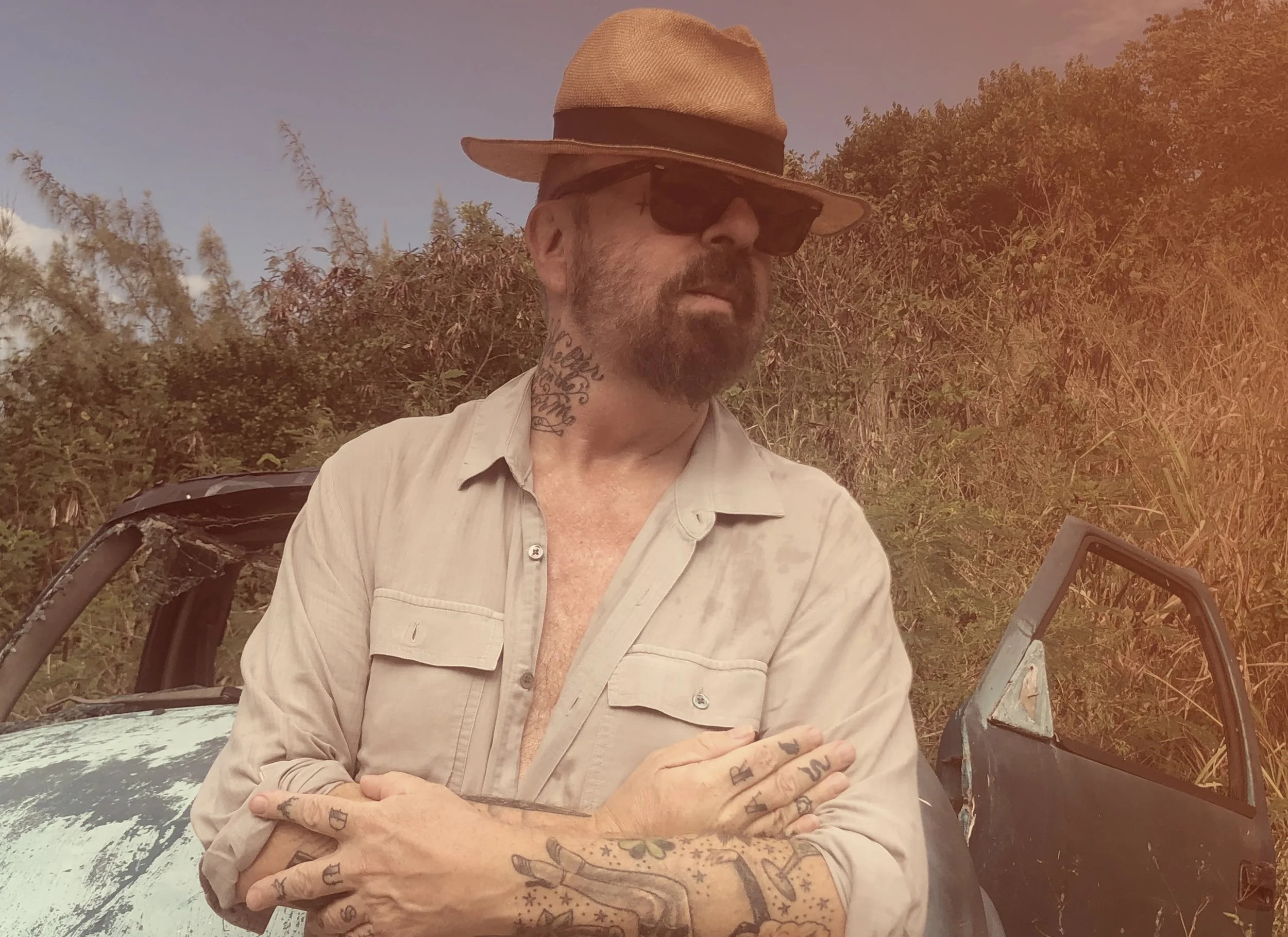
(Photo courtesy of Dave Stewart)
To hear Dave Stewart tell the story, he fell in love with the song “Energy Follows Thought” some forty years before Willie Nelson even wrote it. Back in the early-80s, before Eurythmics and their era-defining, global smash “Sweet Dreams,” Stewart suffered a collapsed lung after a car accident, and he actually died on the operating table before being revived. According to Dave, when he came to, he was a different person. Filled with a new-found positivity, he quit worrying about the wishes of record execs and radio programmers, and he set aside his guitar to start noodling on synths. Rather than laboring at songwriting and production, he started focusing on first-takes, intent on capturing moments and moving on. So, when he first heard “Energy Follows Thought,” soon after its release on Willie’s 2022 album A Beautiful Time, he was hooked in an instant.
“How did I find that song?” he says now, “I think the second I heard the first few lines—‘Imagine what you want and get out of the way / Remember energy follows thought, so be careful what you say’—I was, like, ‘Oh my god…this is one of my favorite songs ever.”
This week on One by Willie, Dave walks us through that awakening and philosophy, which he calls his mantra, focusing not only on the worldview he shares with Willie, but on the way Willie puts it into action. He admires the freedom with which Willie allows Trigger to wander through his songs, and he likens Willie’s lyrics to haiku. From there he touches on the importance of first takes and living in the moment, the healing power of great music, and the beautiful simplicity of Willie’s oft-overlooked guitar-and-vocals-only collection, The IRS Tapes: Who’ll Buy My Memories.
And then, because Dave had posted his own guitar-and-vocal-only version of “Energy Follows Thought” on Instagram the night before we spoke—recorded in the single-take style of his 2025 album Dave Does Dylan—we think aloud about a possible next Dave Stewart project, Dave Does Willie.
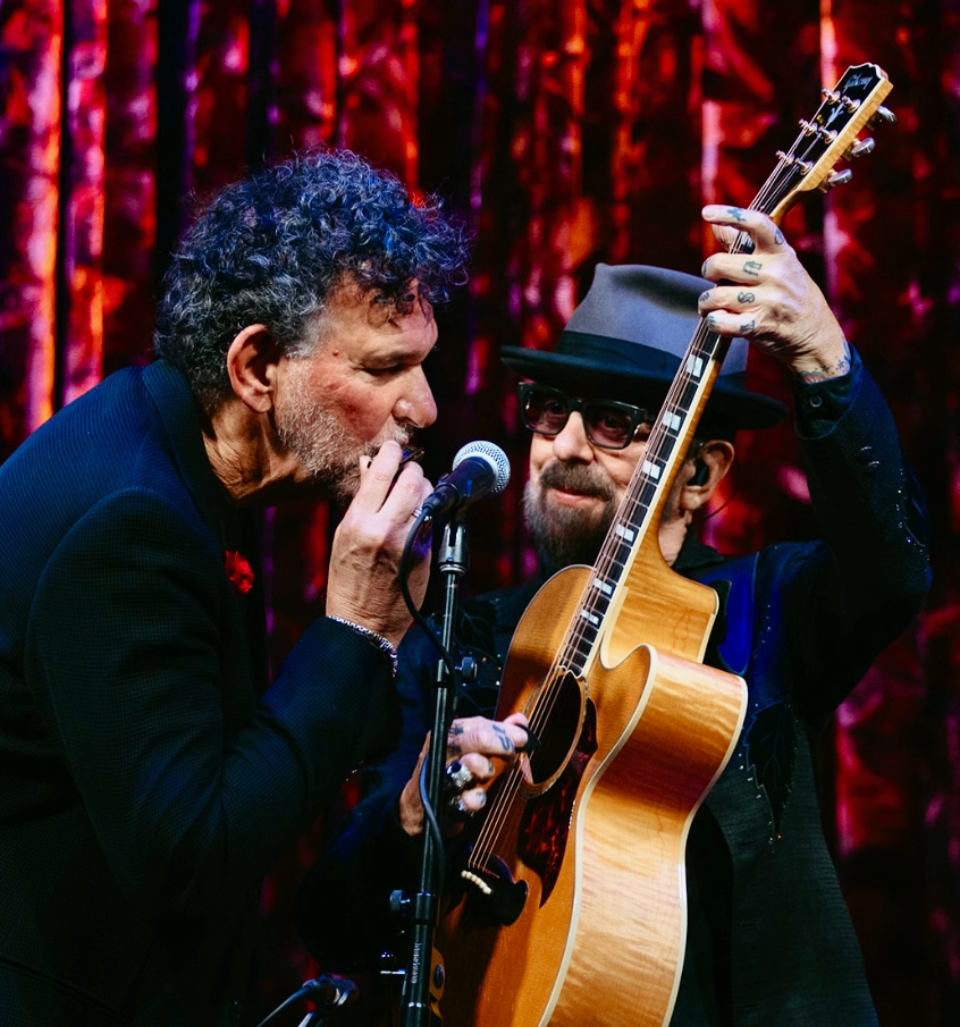
(photo courtesy of Mickey Raphael)
One by Willie is produced by John Spong and PRX, in partnership with Texas Monthly. The PRX production team is Jocelyn Gonzales, Patrick Grant, Pedro Rafael Rosado, and project manager Edwin Ochoa, with graphic design by Joanna Holden and Modular, ink. The Texas Monthly team is engineer Brian Standefer, and executive producers Megan Creydt and Melissa Reese. And Dominic Welhouse provides invaluable research and editing help.
John Spong (voiceover):
Hey there, I’m John Spong…and this is One by Willie, a podcast in which I talk each week to one notable Willie Nelson fan about one Willie song that they really love.
This week, we talk to Dave Stewart, who is—along with his Eurythmics partner, Annie Lennox, and, of course, Willie Nelson—a member of both the Songwriters Hall of Fame and the Rock and Roll Hall of Fame…about one of Willie’s most beloved songs of recent vintage, “Energy Follows Thought.” That song was the standout off Willie’s great 2022 album A Beautiful Time, and one that Dave…who grew up in Sunderland, England, but now lives much of the time in Nashville, Tennessee…loves partly because of the freedom he hears in Willie’s guitar-playing…but also for its deep, spiritual message, which he says takes him back to the near-death experience that fundamentally changed his view of the world and set his career with Eurythmics in motion.
From there we wander far and wide, with the song reminding Dave of favorite haiku, the importance of blowing off the wishes of record labels and radio programmers, the healing power of a great song, and the brilliance of Willie’s oft-overlooked, guitar-and-vocals-only album, The IRS Tapes.
And then, because Dave just happened to post a short cellphone video of himself playing “Energy Follows Thought” on Instagram the night before we taped, we think aloud on an idea for a next Dave Stewart project: Dave Does Willie…which I think would be a fine follow-up to the Dave Does Dylan album he released just last year.
So let’s do it.
[Willie Nelson performs “Energy Follows Thought”]
John Spong: Well, the place to start...and well, it's funny because usually we do, we start with what's so cool about “Crazy,” or “Night Life,” or whatever song gets chosen. But you've picked "Energy Follows Thought,” and I kind of want to know how you even...I want to start with how you even found that song. I mean, it's a deep cut on the 149th album that Willie put out, in 2022. It was not a single. He never even played it live.
Dave Stewart: Yeah.
John Spong: How'd you stumble upon this song?
Dave Stewart: Well, I don't know. I think there was a sort of an animated version on YouTube that somebody made. I don't know whether it was any of Willie's people, but I always had...I don't know, how long have I been going on about that song? I'm always going on about the lyrics. And it's something I truly believe in. I often look back [at] how I got to be alive still, and managed to battle through the woes of the music industry, and everything. You know, it was after I sort of almost died. Well, I did die on the operating table. You know, they bring you back, and I was in hospital, and everything. And I woke up in a hospital bed, had a massive, sort of long operation. And this is when, about 1980? And I just woke up almost like a different person.
You know what a “walk-in” is?
John Spong: Uhn-uh.
Dave Stewart: A walk-in is the idea that when somebody is between life and death, another spirit can slip inside, and you will wake up as that person.
John Spong: Huh.
Dave Stewart: Yeah, so I had an epiphany when I woke up, I was like...I didn't realize I was…"I'm having an epiphany." No. I just woke up with a completely different outlook in the way of thinking, and everything, which then led to Eurythmics, and Annie and I making about eight or nine albums in a row. And every one we made, we literally wrote the songs in about half-an-hour or less, just the two of us together. And made all the albums in about three weeks.
And from that moment on, in the hospital when I woke up, right ‘til this moment, I've had this "Energy follows thought” kind of mantra, philosophy, that…it can be in many different ways. I mean, it can be about illness, and people who really think, "I'm going to battle. I'm going to get better. I'm going to…” often get better a lot faster than people who just think, "Oh, this is the end." And same as in situations, I mean, Willie obviously had it in bucket loads. I mean, when he had everything taken away from him, virtually? And then he made that mad album? About, like, For the IRS, or what was it called?
John Spong: The IRS Tapes.
Dave Stewart: Yeah, Buy My Memories, or something.
John Spong: Uh-huh.
Dave Stewart: I mean, then he just had to start again. It's that thing of, like, pick yourself up and start again. And I think it probably came from my father. He's from Sunderland, obviously, same as me, but we didn't have really much money, and my dad made all the furniture. He made everything, the record player. Like, he was just everything. He just was full of life. And he put this Rudyard Kipling poem above my bed, beautifully handwritten by him. He had this beautiful handwriting, and he put one above my brother's bed. So you know that famous poem, If, by Rudyard. "If you can keep your head when all about you are losing theirs and blaming it on you,” you know?
John Spong: Yeah.
Dave Stewart: And so, I think it’s his sort of positivity was reawoken. Is that a word, reawoken? I was reawakened, but wasn't-
John Spong: I know exactly what you mean.
Dave Stewart: Okay…when I woke up in the hospital bed. And so that song…you said, " Why?" and, "How did I find it, and why?" I think the second I heard the first few lines, which ended with, "Energy follows thought, so be careful what you say." I was like, "Oh, my God. This is one of my favorite songs ever."
John Spong: Well, it's interesting, because when you talk about, like, the stereo, your...well, I think, the Rudyard Kipling poem above your bed, and your dad always making stuff, not being idle, and you doing that after the epiphany–those are Willie ideas, actually. Those are the way he lives his life. He doesn't think...when you mention, some people get sick, and you need to get your mind right, to decide, "I'm going to heal," Willie has spent his whole life saying, "Don't let negative thoughts occupy your time. That's actually a sickness, in and of itself.” And so, it sounds to me, like this song, I asked, "How did you find it?" It's almost like you and this song were meant for each other. Of course, you…
Dave Stewart: Yeah.
John Spong: ...found each other.
Dave Stewart: I think the song found me, you know?
John Spong: Well, let me spin it. Let me spin it for you. I want to..
Dave Stewart: Sure.
John Spong: ...enjoy it with you. Let me...
Dave Stewart: He plays it in F [Dave strums a guitar], “Imagine what you want.” Yeah, that's it. That's the key he's in, yeah.
John Spong: And you can hear this?
Dave Stewart: Yeah.
[Willie Nelson performs “Energy Follows Thought”]
Dave Stewart: Yeah, killer. Amazing.
John Spong: What's that do for you?
Dave Stewart: Oh, it's amazing. So, there's two things going on, right? So, the lyrics [and], obviously, Willie’s amazing, beautiful voice, and then what's great, you see the freedom in his guitar playing. So you've got another guitar player playing what you might say would be like, okay, this is...it goes with the music okay, and everything, but then Willie is just moving around, playing whatever he wants on Trigger, and got this kind of freedom–which he does the same live, and whenever. But the notes are actually, that he does when he's playing these little lead bits, are very clever, because instead of going where Average Joe would, like, end up, because here comes the next verse, or whatever, he leaves it almost like in a suspended kind of...he doesn't go to the obvious note, you know? He'll leave it hanging.
And that's always interested me as well, because I play acoustic guitar a lot live, as well, and lead solos on acoustic guitar a lot live. And that's, for me, my favorite thing. It’s like, I've done it with whole huge orchestras, and just acoustic guitar noodling. And the orchestras...in fact, I've given orchestras heart attack before, when I've turned around, and they went, “Keep cycling around,” and they’re kind of, "Where's the notes?" because they have to read their...But I think the audience, or the ‘people,’–in inverted commas–they get their sort of subtle message when people step out of what's "normal" in a solo, or in a song structure, or in a lyric. They suddenly go, "Oh, I see. This is a real person actually conveying something across to me." Now he does that with Trigger, even if he didn't sing.
John Spong: Yeah. Those things that you refer to as ‘normal,’ what they've done is they've created expectations. And so when he does his thing, it pays no mind to the expectations. It's what he's feeling. It's-
Dave Stewart: Well, he does that in everything. Whether [it's] his business ventures, or whatever it might be, he's just like, "Okay, turning left here...zzzzzp!" But it's interesting because record labels and radio stations, they sort of realized, "Ooh, there's something called ‘the familiarity,’ that we can lean into. So if we get this song played enough, people will like it because it's familiar, and it makes them feel safe." And then they went into, "Oh well, actually, if we make this record sound like this other record, then that'll be familiar as well." And then you got [a] sort of wave of music that started to change. Because in the '80s, nothing was familiar. All the bands were completely, wildly different. You couldn't get more extreme than Eurythmics' “Sweet Dreams” to U2 playing. And yet we were all friends, we all knew each other, but every artist and band was making different kind of music.
And then this thing happened slowly in the '90s, but then in the 2000s, I think they cottoned on to this familiarity thing. So it started to become, hmm, where people would say, "Everything starts to sound a bit the same on the radio," and so forth. Not that everybody listens to the radio now, but they'll try anything, record labels, to sort of sell something. And I've always not really cared about that. I just want something to make me feel something.
And so, I just love everything about Willie's attitude. And about the way he approaches songwriting and music. I mean, writing such incredible, beautiful songs, beautiful melodies. But you can tell, the way he lives his life and everything, that he's like, "Yeah, what that was then, and I'm doing this now, and in the moment."
[Willie Nelson performs “Energy Follows Thought”]
John Spong: Mickey Raphael, who introduced me to you in this roundabout way, he said that this might be his favorite song Willie's ever written. And he said it's in part because, he said, it's just quintessential Willie. It's the summing up of everything he believes. Willie put that coffee table book out a couple years ago that Mickey worked on, that was all of his lyrics, and they titled it, Mickey said, "We titled it Energy Follows Thought because it summed up everything I've learned from Willie." He said, "That song is like all of Buddhism in three minutes."
Dave Stewart: Exactly. Yeah. It's a bit like a haiku–except my favorite haiku was written by my stepfather, who was a Zen Buddhist and he liked writing haiku. And in fact, he was one of the few people that had his…he’s French, and he had his English haiku…the Japanese translated it back into Japanese.
John Spong: Oh, wow.
Dave Stewart: But he was a very funny guy. And one of his serious haikus was, "Between the slabs of gone civilizations, the grass grows," right?
John Spong: Oh, wow.
Dave Stewart: But then one of his humorous ones was, "This dunked biscuit, will it, won't it…reach my mouth?"
He was a bit like a Zen Buddhist, Willie, French-from-Brittany, unusual character, you know? I'm a different, obviously, personality and character to Willie, but I've had instilled in me a lot of this obtuse, or “oblique strategies,” as Brian Eno would say. I never get stuck on, like, "Oh, look out the window with a grand piano and write a song about the sunset." It's none of that. It's just, I'm just doing whatever I want to do, and then a song will just pop in my head. And I'll usually record it immediately without writing the words down, just gobbledy-goop. But about 70% of the words are in there. And then obviously go and start nailing it.
But, you know, in the early days of Willie and Kris Kristofferson and them hanging out and going, "Oh, I wish somebody would record this song I've written called ‘Crazy’ or whatever," you know, I would love to have been there in a cafe or something, hanging out with those guys.
John Spong: But there was also something that you had said about how being…expressing a moment in time, and living in a moment in time, is so important. And it's such a Willie thing. And so Willie wrote this song with Buddy Cannon, who's his longtime producer…
Dave Stewart: That's right.
John Spong: ...and co-writing partner. And Buddy said, "I can't...yeah, I don't remember what line Willie sent first. He might've sent the whole first verse, but it just got me thinking. And so we put it together."
But he also said when he recorded it with Willie, you know, he gets the backing tracks done in Nashville, and then he takes those to Austin to record with Willie. And he leaves room for Trigger, and Willie puts Trigger where he feels Trigger makes sense. But on this album in particular, it's A Beautiful Time, there's this song, there's a great cover of “Tower of Song” by Leonard Cohen…
[Willie Nelson performs “Tower of Song”]
…and then there's another...what was the other song? “I Don't Go to Funerals Anymore (and I Won't Be at Mine.)”
Dave Stewart: Yeah, yeah. That's a great one. Yeah.
John Spong: But it's cool. When I was talking to Buddy about putting that album together, he said, "You know? The album is quiet. It's not somber, it's just quiet. But that's because that's how Willie was when we recorded it. And that's my job. I capture Willie however he is, on that given day, in that moment.” And so some of the music comes out super-quiet. Some of the music at times is actually…
Dave Stewart: Boisterous. Yeah.
John Spong: ...boisterous. And then other times, they didn't even get the recording right and it disappeared. Or they lost the tracks. Or the IRS stole them.
Dave Stewart: Yeah, yeah.
John Spong: But it doesn't matter. For Willie, it's just capturing that moment in time.
Dave Stewart: Oh, yeah. Well, yeah, I'm very, I suppose, a similar attitude in recording. As I said, all Eurythmics' albums done, boom, boom, boom, album finished. And when I work with other people, I don't make any demos. Never make demos.
John Spong: Ever?
Dave Stewart: No. No Eurythmics demos. That's where the record label keeps saying, "Isn't there an extra demo we can put on the..." I said–
John Spong: "There’s no bonus track!"
Dave Stewart: No. Because we didn't make any demos, and I'm very worried to miss the first thing. So whatever artist I'm working with, I don't want to miss the first thing. Because that first thing usually captures something special. And I think if you make demos, and then another demo, and then go and try and record it, now we're in a big studio and this and that…yeah, you might gain some things, but things start to dilute.
John Spong: Yeah. Willie's a first take guy. That's well-established.
It's interesting. One other thing as you talk about how you created music with Annie, one of the other things that Buddy Cannon told me when I was talking to him in preparation for this, he said, completely unrelated, he said, "The song ‘Sweet Dreams,’" he said, "that song means so..." And Buddy, I don't think you've ever met him–he says you all haven't met–but this is a guy who grew up on bluegrass. This is a country dude. That's the first thing you notice when he starts talking. He said, "When our grandson was in grade school, he lived with us for three or four years”–and this is in the '80s. “And I drove him to school and drove him home every day, and he hated going to school. He dreaded it. He had dyslexia and school was awful for him." He said, "But on the drive every day, over and over, he made me play ‘Sweet Dreams.”
[Eurythmics perform “Sweet Dreams”]
And this is the thing, Buddy knows music so well. And he said, "That made it better." He said, "It was like therapy." He said, "The pulse of that song, the drum pattern, the beat, the repetition of the synth-lick, it was hypnotizing, and it took him out of his dread. It was like therapy for him–and for me!” That's the power [of] song. Buddy brought that up.
Dave Stewart: Yeah.
John Spong: Willie's songs have such power. That song has such power.
Dave Stewart: Yeah. Well, it's interesting. I was talking the other day about this. I said, it's not a happy song at all. It's a very dystopian take on the world. And it's like, "Some of them want to use you, some of them want to be used by you / Some of them want to abuse you, some of them want to be abused." And it's very dark.
But you see, on the other hand, it's juxtaposed with a very infectious rhythm, beat, sequence, and melody and everything, you know? So is it his grandson, you said?
John Spong: Yeah, it was his grandson.
Dave Stewart: Yeah, his grandson...I don't know whether the words were going in and the mixture of the music, but there's probably something about it.
John Spong; There's something about music itself. I'm guessing you'll agree, there's something spiritual. So it may be a song like “Energy Follows Thought,” that's actually about spirituality. Or it may be whatever part of your heart that synth-lick came out of, it connects in a way very few other things do.
[Willie Nelson performs “Energy Follows Thought”]
John Spon: You brought up earlier The IRS Tapes: Who'll Buy My Memories, which is a great Willie story. And I thought about this record because, when you did your Dylan covers record, Dave Does Dylan, which is so great, part of the power of it is that it's just you and a guitar.
Dave Stewart: Yeah. It's all one take, acoustic guitar.
John Spong: Why is that context, that setting...you could bring in the best band in the world and you could create some real power doing it that way, but where does the power come from? How can it still maintain that power when it's just you and a guitar?
Dave Stewart: Well, what I did was I put an iPhone on a stick, and did it on one take. And when you're doing something one-take, like, that's it. You can't redo it. And I did it like that because that's what first knocked me over when I was 14. It was Dylan singing with acoustic guitar and playing. And I think, okay, there's a great lot of power in the in-between. Like when you're mixing a record that's got lots of things, my thing is always like, how do I not have anything on top of something else in the story, or get it all out of the way. That's why Annie's voice sounds so loud on Eurythmics records; not that it's really loud, it's just that nothing's in the way.
So, yeah, in the same way, so just acoustic guitar and the voice, well, nothing distracting, any other noise or anything. And then people have said to me on that album I made, "Oh, I love this album because I now can understand all the words. And they're great!" And I'm like, "Well, yeah, obviously it's Bob Dylan."
John Spong: They've been great words for a while now.
Dave Stewart: They've been…yeah, that's why I'm recording it. Because on Willie’s, you can hear all the words he's singing and everything. And Dylan made all different kind of records, and he has a certain way of delivering his vocal, and people in England sometimes just couldn't quite catch what was being said. Which obviously, when you realize what was being said, it’s incredible.
John Spong: My mind turned to The IRS Tapes, because that’s, of all the Willie's records, that's the only one he's ever done that is just voice and guitar. And for anybody that would be listening that doesn't remember that record, as you pointed out, the IRS claimed that Willie owed them like $32 million in the late '80s, and they took all his shit.
Dave Stewart: Took everything, yeah.
John Spong: They went to the studio and took it all. And one of the ways that he tried to get out of it, it's part of that "Energy Follows Thought” thing. It's like, there was a lot of negativity that he could have soaked in, if that was his way. But he came up with this...I mean, it's really a harebrained idea. He's like, "Oh, well what I'll do, I'll put a bunch of songs, my songs, so I get all the songwriting royalties, just me and a guitar”–and he actually had the tapes laying around already–he said, "It will be just me, and then I'll sell…I’ll assign the profits, the royalties, to the IRS to pay off the state...
Dave Stewart: And to IRS.
John Spong: ...if it's $20 a CD, I only gotta sell a million of them. And so, then I'll have some money left over even, maybe." But then, the best of all, they put it out using a 1-800 number, which I don't know if that was a thing over in England at the time, but it was like there would be a commercial on TV, late at night. “Buy this Willie record.”
Dave Stewart: Yeah. “Buy this Willie album.” Or, “Pay the IRS.” Yeah.
John Spong: I wanted to…if you've got the bandwidth, can I play you a song off of that?
Dave Stewart: Sure. Yeah.
[Willie Nelson performs “Pretend I Never Happened”]
Dave Stewart: Yeah. Well, I think he was, "Let's just do this song. Here we go." And then he worked it out, and about a minute-and-a-half in, he got that rhythm of the [singing] “dun-ju, dun-ju, dun-ju,” and then he went off that again and started noodling and playing a solo and trying to play the rhythm at the same time.
And the way he's playing is just like you would when you're sitting in your living room, and you're just, like, sort of noodling about on a song. And that's very comforting in lots of ways, for people that don't want everything to be exactly so worked out like [singing] “Boom, boom.” Some people might say, "Well, that guitar's all over the place." Well, it is. But who cares? Because he doesn't care. And that's a great thing.
John Spong: I've always thought of that record, it’s like, if you ever wondered what it would be like to have Willie sitting at the foot of your bed playing it just for you.
Dave Stewart: Yeah. Or just playing it to himself. Sitting on his bus, or in wherever he is, and just playing it to himself. I mean, I sit like that most nights by the fireplace, just noodling about a bit. It's very therapeutic to do. And it's probably very therapeutic to listen to.
John Spong: Could you do a Dave Does Willie album?
Dave Stewart: You'd have to tell me, after you hear my version of the first time I've ever played "Energy Follows Thought.” On this little Instagram post I did, you can see I'm working it out as I go along. And I fuck up in the middle, but at the end I say, "Oh shit, I fucked up in the middle, but it doesn't matter."
John Spong: What other songs would you put on there?
Dave Stewart: Oh god, I put me on the spot. I'd have to really go through a list that would suit. You see, when I was choosing the Dylan songs, right? And people said, "Oh, some of these are odd choices. We didn't even know that song. Like, ‘To Ramona,’ and things like that." It was partly because of the songs that I first heard as a kid, and partly to do with me putting them into the key that I like. And you want to, especially with Willie, as well, it's the ease. I'm not going to choose something that's not going to feel, for me, natural to do.
John Spong: That doesn't fit well.
Dave Stewart: I'm not going to sing “Crazy,” for instance. I'll probably choose some of the leftfield ones.
John Spong: “Still Is Still Moving to Me.”
Dave Stewart: Yeah. The funeral one. “I wouldn't go to…” I mean, he's got so many great songs.
John Spong: If you were to collaborate with Willie, if you were going to do something with Willie, and we'll keep it something for in-the-moment. This could be recorded, and it could be listened to by the whole wide world—or it could be something nobody ever hears. What would you do?
Dave Stewart: Oh, if I was sitting on a bus or somewhere with Willie?
John Spong: Yeah.
Dave Stewart: I'd just start noodling around on the guitar. And so would he probably. I suppose…[guitar strumming] just like noodling about. Yeah. So, that's something that Willie might spark some melodic idea or vice versa. I suppose how I write with anybody, really.
John Spong: if you do decide to put together a Willie record and you need any research help, I'm always available.
Dave Stewart: Oh, yeah. You're giving me an idea. I don't know how we do it, but how do we show the song on the Instagram? And then you can hear it, and we can listen to it together and have a laugh.
John Spong: I love it. I can do it.
[Dave Stewart performs “Energy Follows Thought”]
John Spong: And are there lines in that song that leap out at you?
Dave Stewart: "Energy follows thought. Be careful what you say.” I like the bit about your mind. It will go off.
John Spong: Yeah. “Your mind is in control, even when you do not know.”
Dave Stewart: That's it exactly, yeah.
John Spong: “If you let it idle, ain't no telling where it'll go.”
Dave Stewart: Oh, that's so brilliant.
John Spong: Yeah. I think Buddy said his favorite…he loves the part about sleeping. And how even when you're sleeping, things are working for you. “And if you hear the spirits talking, their wisdom can't be bought.”
Dave Stewart: Yeah, that's great. No, I mean, every line's great. That's why I like the song.
John Spong: It's powerful.
Dave Stewart: And the funny thing is, for some reason, I just realized now listening to it, I'm singing it, like, as if Dylan would sing a Willie Nelson song. Because I've done Dave Does Dylan, I'm suddenly phrasing it partly like Dylan, doing a Willie Nelson song. But it was first-take, and the first time I've done it, so...
John Spong: Hey, Dave Stewart's impression of Bob Dylan's impression of Willie Nelson's pretty cool.
Dave Stewart: Yeah. Exactly.
John Spong: The only other thing I have for you is that when I was talking to Buddy, I said, "Do you see Dave around town much?" He goes, "No, I don't think I've ever met him." And I said, "Well, I think he spends a lot of time at Blackbird Studio. And Buddy said, "Oh, well, that's where my office is. I'll look out for him."
Dave Stewart: Really?
John Spong: Yeah. I said, "Well, he's usually in a fedora and sunglasses with tattoos on his neck." And he said, "Yeah, that's a lot of the people coming in and out of there."
Dave Stewart: That's everybody. Yeah.
John Spong: I could not be more appreciative of your time and the chance to listen to this stuff with you and think about it with you and now I know it better. And so, I'm really appreciative.
Dave Stewart: All right. Well, tell Willie and Mickey, I am a massive fan. And anytime he wants to noodle, I'm a noodling kind of person.
[Willie Nelson performs “Energy Follows Thought”]
John Spong (voiceover):
All right, Willie fans. That was Dave Stewart, talking about “Energy Follows Thought.” A huge thanks to him for coming on the show, and a big thanks to you for tuning in. If you dig the show, please subscribe, and stop by our website at onebywillie.com. Oh, and please visit our page wherever you get your podcasts and give us some stars or type in some comments, or maybe just tell one friend to check out the show. Every little bit of that helps more than you know.
One by Willie is a production of John Spong and PRX, in partnership with Texas Monthly. Our PRX production team is Jocelyn Gonzales, Patrick Grant, and Pedro Rafael Rosado, with project manager Edwin Ochoa. Our Texas Monthly team is producer / engineer Brian Standefer, and executive producers Megan Creydt and Melissa Reese. Our art and web design come from Joanna Holden and Modular, ink. And we get invaluable research and editing help from the great Dominic Welhouse.
Please follow us on Instagram at onebywillie–all one word–find us on bluesky, and join our ever-expanding Willie conversation at the One by Willie group on Facebook.
I’m your host, John Spong…thanks for listening.