
Kenny Chesney Calls Willie Nelson a Creative Compass in Being Yourself
The Country Music Hall of Famer talks about “That Lucky Old Sun,” the power of a hushed vocal, and what it was like to produce an album on one of his heroes.
By John Spong
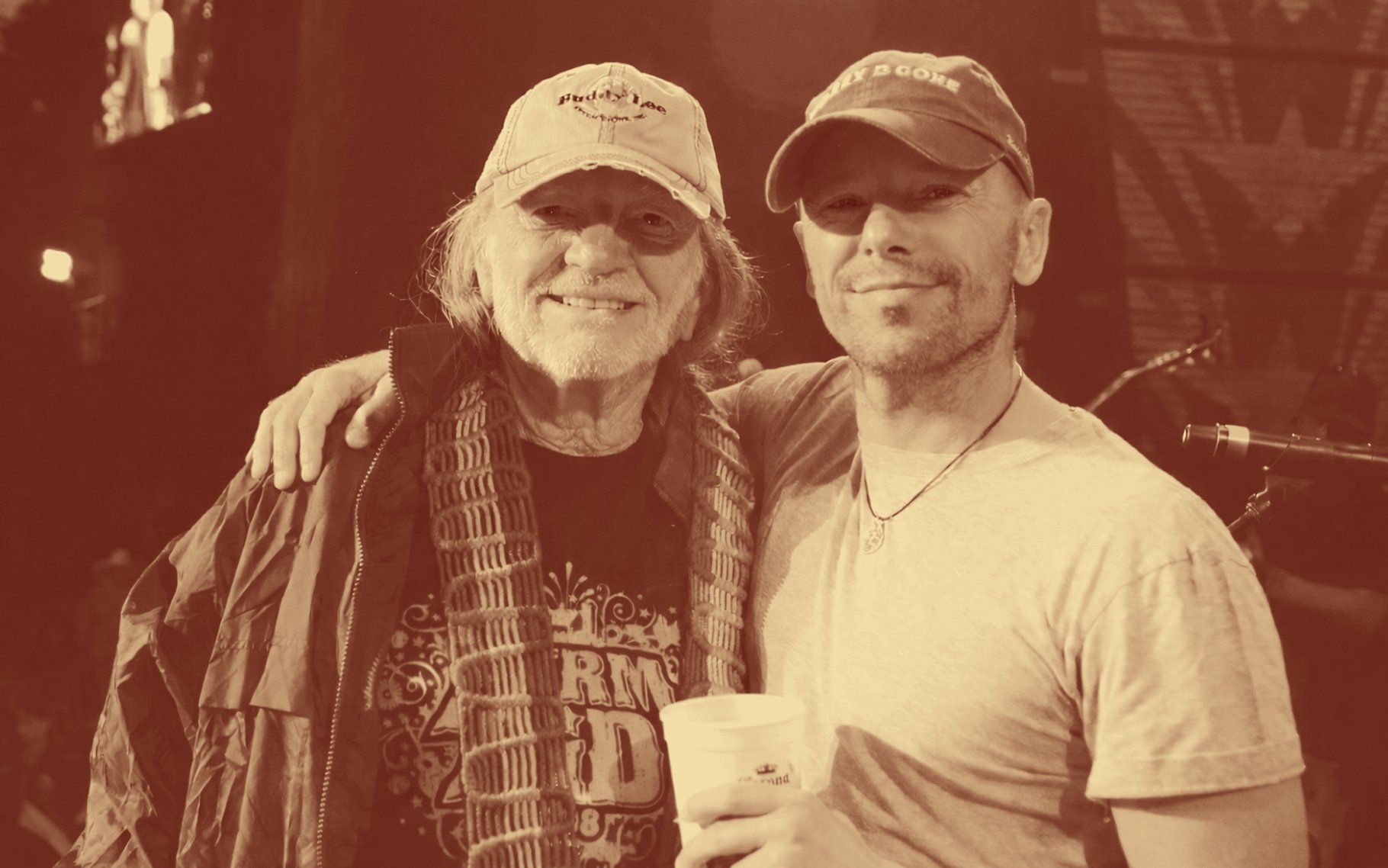
Willie Nelson backstage with Kenny Chesney. (Photo courtesy of Kenny Chesney.)
Kenny Chesney will tell you he spent most of the 90s on a tour bus. Long years before he became a stadium-headlining act, he was a hungry singer-songwriter, racking up country radio hits and crisscrossing the country to play every state fair he could book. But he was also a student of great country music, and one of the songs on steady repeat in his bunk on the bus was Willie Nelson’s 1976 cover of “That Lucky Old Sun.” That track, the opener off the album The Sound in Your Mind, was one of Willie’s first forays into covers from the Great American Songbook, a table-setter for his Stardust triumph two years later. But it was Willie’s remarkably hushed vocal that drew Kenny in, hammering home a lesson from his first producer, Muscle Shoals legend Barry Beckett. Kenny had come up in honky-tonks and bars, singing to catch the ears of rowdy crowds. “Barry told me, ‘You have to be delicate. You have to put a smile on it.’” That’s precisely what he heard in “That Lucky Old Sun.” “Willie was like a companion for me on that bus.”
On this week’s season premiere of One by Willie, Kenny—now a country music icon himself, as well as author of a New York Times #1 bestseller, his 2025 memoir Heart Life Music—walks us through his memories of those early years and lessons, before describing the dream realized when he duetted with Willie on “That Lucky Old Sun” in the mid-2000’s, a track I’ll argue is one of the most important records Willie ever made. From there he gets into producing Willie’s 2008 album, Moment of Forever, plus the way Willie’s example informed the shift in artistic direction that grew Kenny into Billboard magazine’s Top Country Artist of the 21st Century.
“I felt I had to change,” says Kenny about the soul-searching that led to No Shoes, No Shirt, No Problems, a 5x-platinum album that was his first to top the Billboard 200, in 2002. “I had to be more vulnerable, had to be more creative. And Willie Nelson showed us all. He’s like a creative compass in being yourself. And I am forever grateful.”
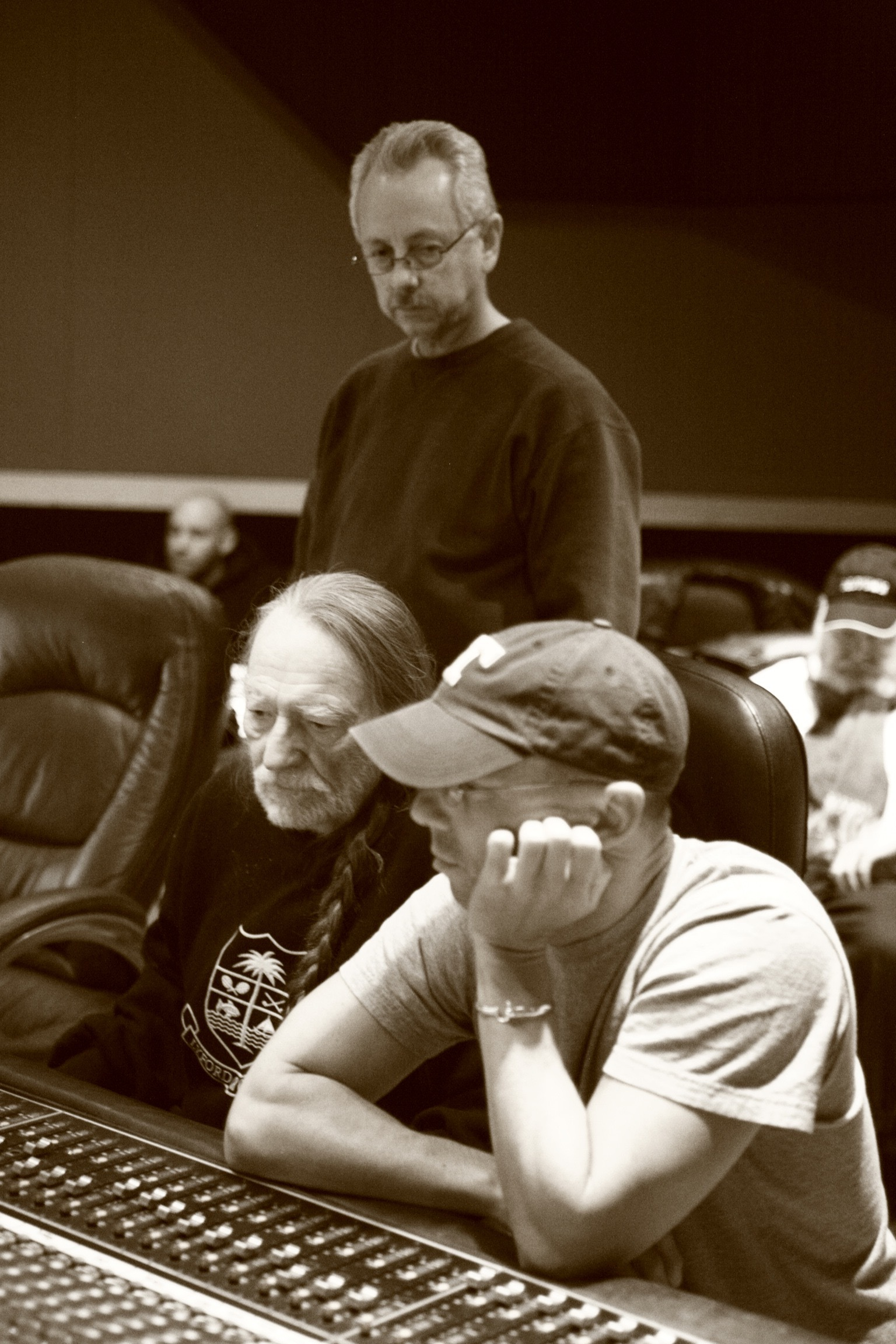
Willie and Kenny, with Buddy Cannon in the studio, late 2007. (Photo courtesy of Kenny Chesney.)
One by Willie is produced by John Spong and PRX, in partnership with Texas Monthly. The PRX production team is Jocelyn Gonzales, Patrick Grant, Pedro Rafael Rosado, and project manager Edwin Ochoa, with graphic design by Joanna Holden and Modular, ink. The Texas Monthly team is engineer Brian Standefer, and executive producers Megan Creydt and Melissa Reese. And Dominic Welhouse provides invaluable research and editing help.
Transcript
John Spong (voiceover): Hey there, I’m John Spong…and this is One by Willie, a podcast in which I talk each week to one notable Willie Nelson fan about one Willie song that they really love.
This week, we talk to singer-songwriter Kenny Chesney–who also happens to be a Country Music Hall of Famer; author of a New York Times #1 non-fiction book, Heart Life Music; and most important for our purposes, a longtime friend, fan, and collaborator of Willie Nelson’s–about Willie’s 1976 version of “That Lucky Old Sun.” Now, that remarkably hushed recording, which opened the album The Sound in Your Mind, was one of Willie’s first forays into covers from the Great American Songbook, and to my mind, it set the stage for his masterpiece album Stardust two years later. But for Kenny, what it does is take him back to long bus rides when he was first making his way through country music…and listening to a lot of Willie Nelson.
From there we get into the duet the two did together on “That Lucky old Sun” in the early 2000s, which ended up being a pivotal record in Willie’s long career, plus what it was like to produce a record on Willie, 2008’s Moment of Forever, and the way Willie’s example helped inspire the artistic change in direction that grew Kenny into Billboard magazine’s Top Country Artist of the 21st Century.
Oh and we also listen to a little Ray Charles together, which is always a treat.
So let’s do it.
[Willie Nelson performs “That Lucky Old Sun”]
John Spong: The place to start is where we always start…in your memoir, Heart Life Music, you talked about, first getting to know “That Lucky Old Sun” from listening to Willie's Sound in Your Mind album from 1976 on repeat. Tell me about that. Tell me what grabbed you about that version of that song and that.
Kenny Chesney: It was just there's a certain honesty in his voice. And I loved the melody. I loved what it said. But I grew up with my grandparents. I shouldn't say “grow up;” I lived with them when I was a child for three or four years, and I heard Willie's music in her house. And that's where I first heard this voice that we all know and love now, right?
And I guess I can't remember where I heard Willie's recording of it, but I remember always loving that song. I just loved Willie's voice. And you fast-forward, and you become an adult, and you get on a bus with your band, and this is before all the tour buses had Wi-Fi on it, and it was before they had DirectTV on them. So I would-
John Spong: It may have been before Wi-Fi.
Kenny Chesney: Well, yeah, but I'm saying when I went out there, all I had to do was, we had VHS. It's kind of like the old Jackson Browne song, “We got country and western on the bus, R&B?” You know that song?
John Spong: Yeah.
Kenny Chesney: So I would be in this cocoon in my bunk and I would just listen to all kinds of music. And that's where I first heard Willie's version of “Lucky Old Sun.” And I don't know, I've always gravitated towards it. And so when I got the chance to do that on my own, I reached out to Willie and said, "Hey, would you please consider?" And he did. And so that's how that song was born.
John Spong: That's awesome. Well, do you know much about the writers or how it was written?
Kenny Chesney: I don't. I really don't know. I should.
John Spong: No, no. No. It's really cool. So it's Haven Gillespie and Beasley Smith. And so Haven Gillespie, you'll know this one. He wrote “Right or Wrong”--which was a huge hit, number one, for Strait.
Kenny Chesney: For Strait.
John Spong: And he also wrote the lyrics–he's the lyricist–he also wrote “Santa Claus is Coming to Town.”
Kenny Chesney: Wow. I didn't know that either.
John Spong: You know that. Beasley Smith-
Kenny Chesney: Good songwriter.
John Spong: Yeah. In fact. [And] Beasley Smith gets me because in the '20s, he's a band leader. He's a piano player and a band leader. He does the music for “Lucky Old Sun.” And he's in Nashville, and he and Owen Bradley are buddies, because they're the two big band leaders and piano players in town through that period. In the '30s, Beasley Smith, and this tickles me, I hope it's not boring, he becomes music director at WSM. And WSM hasn't figured out what they're going to be quite yet, and it's a little bit pop, and they haven't figured out that country is the way to go.
Kenny Chesney: Yeah.
John Spong: So when he's there, he's on this show called–because they're playing both kinds of music–the show he stars in is called Tin Pan Valley, which is kind of ridiculous. I love that. But then in the '40s when country takes over in Nashville, he and Owen Bradley are the ones that are booking all the sessions. And so…
Kenny Chesney: That is so crazy.
John Spong: …he was pivotal in turning Nashville into what we know now.
Kenny Chesney: I had no idea. And usually, when I was in college, I would be the person that would really read the back of the records to see who the songwriters were and to see who produced it. I wanted more than just the song. Right? So I'm really surprised I didn't know who the writers of that song was, because it had echoed around in my brain and in my soul long before I went into the studio to put my voice on my rendition of it, and then asked Willie to sing on it.
And as many times as I've listened to that song, I had no idea that the writer, because I’ve become really good friends with the Bradley family. Clay Bradley, who's at BMI, I mean, he and I grew up in this business together. And Jerry Bradley signed me at Acuff-Rose. So it's like I had no idea that there was that whole story about that song.
John Spong: It's one of the cool things for me, even though--
Kenny Chesney: So we're all connected in ways. We really are. We really are.
John Spong: Yeah. Well, no…Nashville, it's a big old family. Everybody has got some connection to each other, someway–
Kenny Chesney: Whether you know it or not.
John Spong: Yeah. One of the things that I dig doing, if it's cool, when we get to Willie doing, especially these old American Songbook records, I love to play just a snippet of what he would've heard first, so we get a sense of where he goes to interpret. And so, the first big hit on this, the biggest hit ever was in 1949 by Frankie Laine. This would be the song Willie would've heard when he's in high school. He's already playing in polka bands around North Central Texas. And this is where Willie gets it to start.
[Frankie Laine performs “That Lucky Old Sun”]
John Spong: Frankie Laine.
Kenny Chesney: Oh, wow…wow.
John Spong: I love that. Different.
Kenny Chesney: It's different. But that's an amazing example of how a great melody never goes out of style.
John Spong: Yeah.
Kenny Chesney: Never. So that is a very….what year did you say that was?
John Spong: '49.
Kenny Chesney: 1949. That melody would still be relevant. I mean, I forgot what year Willie and I did that. It's been a few years. But if somebody recut that today, it would be sonically different, obviously. But the melody, I mean that just goes to show you whether it's that recording, Willie's, mine and Willie's, that melody never goes out of style. A great song.
John Spong: Well, and so get this, because then the next one that Willie would've got is Ray Charles, in '63.
Kenny Chesney: Oh, yeah, I forgot. Oh, yeah. Yeah. Wow.
John Spon: And holy smokes. I mean-
Kenny Chesney: He was a good country singer.
John Spong: In fact.
Kenny Chesney: He was.
[Ray Charles performs “That Lucky Old Sun”]
Kenny Chesney: How have I never heard this version?
John Spong: You haven't?
Kenny Chesney: No.
John Spong: Check this out.
Kenny Chesney: See?
Kenny Chesney: Wow. Wow.
John Spong: Right?
Kenny Chesney: See, what do they say? Ignorance is bliss? See, I have never heard that. Had I heard that version, I probably would've never recorded it. Wow! I mean, that is so great!
John Spong: Isn't that something?
Kenny Chesney: It's so great. And here I am thinking, "Okay, I'm going to go in and put something new on it." And luckily, Willie said yes…
John Spong: No.
Kenny Chesney: …because that's the only thing I did.
John Spong: It's so cool, dude. Well, it's great. To me, that sets up Willie's version so well. That is so lush.
Kenny Chesney: Wow!
John Spong: It is so lush.
Kenny Chesney: I've never heard that. I'd never heard it. I was ignorant to the fact that Ray Charles sang it.
John Spong: The emotion in Ray's voice against that lush, widescreen, orchestral background is-
Kenny Chesney; It's just an unbelievable canvas. It's just beautiful.
John Spong : Yeah. And I have this idea–and I've made this up–but it's like if Willie grew up on the song that one way, but then he heard it this second way 15 years later, I wonder if that was one of the moments that made him think, "Oh, these songs…you can take these beautiful songs and you can do them with what's going on inside…and you can do something really special." And Ray Charles was the king of that.
Kenny Chesney: It's almost like such a universal melody that so many different genres can sink its teeth into that and it be authentic, if it's authentic to the artist. But wow, I had never heard the Ray Charles version. As soon as he started singing, I was like, "Oh, my God, I'm glad I didn't hear that."
John Spong: He was good at what he did. Well, then, that sets us up.
Kenny Chesney: Wow.
John Spong: If that stuff is somewhere in Willie's mind, in 1976, he goes into the studio in Garland with the band and he does…
Kenny Chesney: Let me hear it.
John Spong: …the version that made you fall in love with it.
Kenny Chesney: Yep.
[Willie performs “That Lucky Old Sun”]
Kenny Chesney: There it is. …Mickey.
John Spong: Yeah.
Kenny Chesney: Man, that takes me back. We were all on one bus. These days artists, some artists get a bus per song. We were all on one bus for like eight years, and we laughed so much, had so much fun. But see, it was on that bus that I first heard that song. While we were listening to that, I was staring out the window here, and it just brought back so many memories on that bus.
But Willie was like a companion for me on that bus. And that song, specifically. But if you listen to that version and then, you know, you heard Ray's, and Ray's is, like we said, it's got this orchestra and it's beautiful. But that version is why I connected so much with the lyric. [It’s] because Willie's voice led the track. The track didn't lead the voice.
John Spong: Yeah.
Kenny Chesney: And that's what I think I always loved about that song and loved about Willie's cut. And when I went in to do mine, I kind of borrowed from that a little bit. But I think that the simplicity of that record is...and that's hard. People don't understand. And I've been making records now for 30-some odd years, right? Simplicity is the hardest thing to do in the studio. And when you listen to that, it's simple. The track is really simple, but wow, I mean, it's great.
You know, Willie's voice is the secret sauce to all of that. But simplicity's hard to do in the studio. But the thing I love about that version is Willie's voice led the track and the track didn't lead the vocal. Sometimes that can be a slippery slope. And when you can pull that off, it sounds really great.
John Spong: And talk more about the vocal because one of the things that I've always loved about this album, and if people haven't paid enough attention, it's Sound In Your Mind, which is right after Red Headed Stranger. It's in the same studio. Willie's broken, but this is the next record. It's the first record of his where I noticed that on certain songs he sounded like he was whispering.
The voice is so distinct that until I started paying really close attention, not that it blurred together, but I just, "Oh, that sounds like Willie." But once I started to listen closer, I could hear the artistry in it and decisions he's making or just acting on feelings he's having while he sings. And he sounds…the vocals are so amazing and nuanced on this record, and this track, in particular.
Kenny Chesney: One thing, when I spent so much time singing in bars in college, and even after I first moved to Nashville, I sang downtown on Lower Broadway, where Willie and Kris and everybody spent several years of their life. When I got into the studio with [producer] Barry Beckett, I was just singing like I was singing in a bar. And it took me a minute. Barry goes, "You got to be delicate. You got to put a smile on it," he always said.
John Spong: Oh, yeah.
Kenny Chesney: And so I think any vocalist, especially an interpreter like Willie is, kind of finds their sweet spot over the years. And I don't know, I had to learn to be an interpreter, not just a honky-tonk singer. Or someone singing out in bars and stuff. And it took me a minute. And it took Barry, he goes, "You don't have to yell. Don't yell at me." So when I hear “Lucky Old Sun” by Willie, and especially some of the stuff on Stardust, you could tell that's an interpreter of a song.
[Willie performs “That Lucky Old Sun”]
John Spong: Well, so then that tees us up. You dueted with Willie on this song.
Kenny Chesney: I'm very proud to say, I mean, I haven't done a lot of duets. I mean, a ton? I've done some. But I've sang more with Willie Nelson than I have with anybody, ever.
John Spong: Oh, wow. Nice.
Kenny Chesney: I think. Let's see. I sang with Willie on “Last Thing I Needed, First Thing This Morning.” It was a live version for his [70th] birthday, at the Beacon Theater in New York. So that's one. The first time I ever sang with him in the studio was on my Christmas record. My grandmother loved Willie, and so like I said, that's where I first heard his voice. And I'd hear “Pretty Paper” all the time, every Christmas. So I recorded that song, and then Willie agreed to sing on that with me. So that's two. I sang…me and Buddy Cannon produced a record on Willie called Moment of Forever.
John Spong: Oh, before you get there, can we…tell me about “Lucky Old Sun” because just for chronology.
Kenny Chesney: Yeah, yeah.
John Spong: Because this-
Kenny Chesney: Okay. But my point is, I think I've done four or five duets with Willie, and it's just crazy to think about that. But my favorite is “Lucky Old Sun.” And I went in and recorded “Lucky Old Sun.” I'd lived with Willie's version so much, I told Buddy Cannon, I said, "I just want to go in and record it. I don't have any project that's going on. I don't know what it's for. I just want to go do it."
John Spong: Yeah.
Kenny Chesney: So I was in the middle of a tour, and I got home on a Sunday. Before I left the next weekend, on a Tuesday afternoon, we went in and got the players that I wanted, and it was a really fun day of making music. And the freedom of that is pretty amazing. When you go in and just make music, and you don't know where it's going to live, you're just doing it because you love it.
And I sang it. I had my version of it. We had it mixed. And I told Buddy, I said, "Will you please send this to Willie Nelson to see if he'll sing on it?" You know what I mean? By then, Willie had sang on a few things. But I’d lived with his version so much, I just kept hearing him in that second verse and then that second chorus. And he did it, and I had it mixed, [and] for three years, it didn't live anywhere.
John Spong: Oh, wow.
Kenny Chesney: And I would get home. I would get home off the road. I would fly home after a show. And at that time, I lived about 45 minutes south of Nashville, and I would get home at 12:30 or 1 o'clock in the morning. And it was in the middle of summer, and I'd roll both windows down, and I would put on, this was back when we still had CDs, and I had that CD of just that song, with me and Willie singing “Lucky Old Sun,” in my CD player for almost two years and never took it out.
John Spong: Wow.
Kenny Chesney: And so I would get home, roll the windows down and driving home late at night, and I would just listen to that version. It had a way of relaxing me and calming me down after a show. And finally, it made its way onto what we called the Lucky Old Sun album. But it took a minute.
John Spong: I love that because in the process of overthinking all these different recordings of the song, when I hear Frankie Laine sing it, it sounds to me like he's trying to make you think he's standing in a field–because it's a work song–and he sings like he's standing in the field, doing it that way. Willie's version is so much quieter on Sound in Your Mind. To me, it sounded like, and maybe it's because it leads off the album, but it sounded to me like it was a quiet moment before work, and he's just kind of looking out there going, "I don't know, man…but here we go again."
But y'all's version, I was going to ask what you were trying to go for sonically with the arrangement, because it sounds to me…first, it's wonderful because it's two voices, so it's two guys toiling together. But your version sounds like the end of the day. You are finally off work and sitting on the porch and comfortable.
Kenny Chesney: My version, I felt like, and especially the album that it ended up on, had…I know it's a work song, but mine and Willie's version had a little bit of escape in it.
John Spong: Yeah.
Kenny Chesney: A touch. And I don't know. I wouldn’t say…yeah, you're right. It's like towards the end of day. It's got a little bit of exhaustion in it and a little bit of escape in it. And maybe that's where I...and truly, when I recorded it, that's where I was in my life. I was…there was a moment of my life, during that period, that I would truly pack to come home. Like, I had everything on the bus. I was gone so long.
So I had nothing at home, so I'd have to pack stuff to go home for a few days. So that's kind of where I was in my own life. And I've always felt like, wow, I crave stillness, but when I get it, I really freak out. Because I…what was that song Willie wrote? “Still Is Still Moving to Me?”
John Spong: Yeah. Exactly.
Kenny Chesne: So it’s kind of…I know that emotion pretty well. So I think that's where I was emotionally, mentally, and when I went in to record this song. So if it has a little bit of that. I don't know. Now that I think about it, there's a little bit of even angst in it. So that's where I was when I recorded that song with him.
[Willie and Kenny perform “That Lucky Old Sun”]
Kenny Chesney: Two Christmases ago, Lukas invited me to come to Maui. And they did a show, and all the proceeds went to help the families and everyone recover from the fire they had out there.
Kenny Chesney: And I hadn't seen Willie and Annie in a little while. And as soon as I walked in to say a quick hello to Willie and give Annie a hug…and as soon as I did, Annie started singing [singing] “That lucky old sun…nothing to do…” I said, "That's one of my favorite songs I've ever recorded." She goes, "That's one of my favorite songs you've recorded too."
John Spong: Well, within that-
Kenny Chesney: Made me feel really good.
John Spong: It should. And that's why I asked you to hold off on talking about Moment of Forever, because I would say, in my opinion, that “That Lucky Old Sun” is one of the most important tracks Willie ever cut. But rather than me explain that, can you describe the chain of events that was set off by that recording?
Kenny Chesney: Yeah. Well, we put out “Lucky Old Sun” obviously; it was the title track of that record I put out. After that came out, me and Buddy got a call from Mark Rothbaum. And Mark goes, "Willie just loves the way he and Kenny sound on this track together. He loves the instrumentation. He loves it sonically. He loves the way…"He goes, "Would you guys be interested in making a record?" And I was exhausted when I got that call on the road. Every year in August, I'm pretty tired. But I couldn't believe it. I went, "Yeah. Yeah." I mean, Buddy and I said, "We really want to do this."
And so, I'll never forget it. The first day in the studio, we had all the players, and when I'm in the studio, and I'm singing the, uh, it's what's called the scratch vocal, you're in the vocal booth and you're singing along with the players, well, Willie was in there this time because it was his record, and he's got Trigger in his arms, and he's playing along, and he's singing along, doing the scratch and playing at the same time. We've got his guitar mic-ed. But I wanted to be a part of it. So I'm in the actual room where all the players are on a stool with my own mix and headphones, like I got on now.
And the first song we recorded was “Moment of Forever,” which was a Kris Kristofferson song. And I was in a direct eye-line of just of Larry Paxton, who was playing bass. And I'm kind of in the middle of all the players, but Larry and I are pretty close together, geographically, in the room. And yeah, that was November. So from August to November, me and Buddy are listening to songs, Willie's sending us songs, we're sending Willie songs. We even went out to Santa Monica and met Willie on his bus at Shutters. And all we did was sit and listen to songs all day, and then I flew home.
But finally, here we were in November. And we got the songs. The first song we recorded was “Moment of Forever.” And the moment Willie opened his mouth, and he goes [singing] “Was it wonderful for you…” Larry Paxton and I catch eye contact, and we just look at each other. And that's when it really hit me, the opportunity that I had. And how special it was. And so from that moment, from that first line, all I could think about was, "Man, I hope I don't mess this up."
[Willie performs “Moment of Forever”]
Kenny Chesney: You know, it was one of the most amazing experiences that I've ever had. I mean, and all of a sudden, the next thing you know, you look up, and you look through the window into the control room, and there's Hank Cochran, and there is all these songwriters that I loved growing up. And they're in the room, and they're in there for the whole session. I'm sure they heard Willie was cutting and they're bringing songs too, but still though, it was such a...Oh, there's me and Buddy Cannon in there with Hank Cochran and Willie Nelson.
And it was great. It was just such an amazing experience for me. And Buddy and Willie went on to make a lot of records after that. But for me to be a part of that album, and to make music on such a intimate level with someone that really influenced me was one of the most amazing experiences of my life.
John Spong: A couple thoughts. One, I had read that y'all had the initial meeting to listen to songs at Shutters. I've not been there. My wife, during a previous life, used to spend a lot of time there, and it sounds like just about the fanciest place in the world. And so the fact that you go there to meet Willie, but he's on the bus outside...
Kenny Chesney: That's where he wanted to go. He had his bus in the parking lot. And I think he was flying from Hawaii, Buddy and I were flying from Nashville. He had his bus pull into the parking lot at Shutters and we met him there. We spent all day there listening to the songs. I thought it would be a good idea to record Randy Newman's “Louisiana.” I had that song. I had a couple others I had, and that's the first time I played him a Dave Matthews song called “Gravedigger.” And Buddy had a few songs, and he had a few songs that he had written with Lukas and Micah. And we were all just, I mean, we spent all day just listening to music. It was beautiful.
John Spong: Well, it sounded like he wanted to play your song, “I'm Alive.”
Kenny Chesney: Yeah. Well, I brought it to him, and I thought that it would...Well, I mean, here’s…sometimes, I used to, when I was drinking a lot, I would drunk-dial people. And one night I felt so confident in mine and Willie's friendship that I felt like that, that I could do that. And I didn't know where Willie was, but I feel like if I'm up, everybody's up. So I did.
It was late at night. And Willie truly, Willie answered the phone. And I said, "Willie, are you asleep?" He goes, "No, I had to get up and answer the phone." But I was listening to “I’m Alive,” and I said, "Well, I got a song I want to play you one day." Dah, dah, dah. And that was “I'm Alive.”
John Spong: Oh, wow.
Kenny Chesney: And so I had that in my pocket. And I wrote that song with Dean Dillon, and so I took that there and Willie was the first...and I eventually sang, I think it was actually on Lucky Old Sun that I actually did “I'm Alive.”
John Spong: With Dave.
Kenny Chesney: With Dave Matthews. But Willie was the first one to cut it.
[Willie performs “I’m Alive”]
John Spong: What's it feel like when Willie cuts your song? Lucinda Williams started to cry when she talked about it.
Kenny Chesney: It's insane. Yeah, it was insane. Because Willie…I mean, I didn't know if I was going to play it for him or not. Because I didn't want it to seem like I was pushing one of my songs. But I asked him, I said, "Do you want to hear that song I was listening to the night that I called you from the Virgin Islands?" He goes, "Yes."
John Spong: Well, it's great when you talk about [how] you didn't want to be pushing songs, a story that Mickey told me about those sessions, because he talked about how cool it was when Hank Cochran showed up. And Mickey paused, and then he said, "You know, because Hank was famous for showing up, when people were in the studio, with songs that he thought they should cut." I said, "Yeah?" And he said, "And so Hank showed up the day we were cutting ‘Gotta Serve Somebody,’ by Bob Dylan–and he had written a new verse to ‘Gotta Serve Somebody’ that he thought Willie should sneak in."
Kenny Chesney: So he could get on the song. So…I remember.
John Spong: That is the funniest thing I've ever heard.
Kenny Chesney: Yeah, yeah. But I can’t tell you what it was like to be in the presence of that.
John Spong: Well, and what it set in motion, and you alluded to it a second ago, Buddy Cannon, who's your producer, and has been such a huge part of your career, and he's just such a wonderful dude. He goes from there to produce...he's produced 19 albums on Willie since then. Everything since 2012, except for a handful of albums. 19 of 23 albums are Buddy. And the stuff they've created over the last 15 years or so, it's just mind-boggling.
Kenny Chesney: I'm so thankful that I was there just for a moment of that. But still, I mean, to be in there and to see this master work. As a record producer, and as a music man, and as someone who truly loves him and loves that music and loves those songs, it was one of the highlights of my musical life.
[Willie performs “That Lucky Old Sun”]
John Spong: In your book, you call Willie “a compass for artists with their own vision.”
Kenny Chesney: Yeah.
John Spong: Fill that in for me. What's that mean?
Kenny Chesney: Well, I think that the artists that want their own freedom with the music that they make, and the freedom to make it the way they want to make it, and put it out the way they want to put it out…you know, Willie did that years ago. He's been a compass for so many artists for so many years with that in mind. Especially creative people that write their own music. I mean, there've been really successful people that didn't write their own music, right?
John Spong: Right. Right.
Kenny Chesney: But like I said earlier, I was always drawn to the people that were creative because I felt like at my core, I was a songwriter first and then an entertainer. And I still feel that way. So it made me happy to know that there was a person like Willie Nelson that was doing it on their own terms, and he was somebody that you could go, "Oh, wow, well, look how he did it."
John Spong: It's a great example.
Kenny Chesney: Instead of a calculated marketing plan.
John Spon: Right.
Kenny Chesney: Because I will tell you, yes, the labels over the years that I've been a part of, they love the really commercial records. Now, when I put out Lucky Old Sun or Songs from an Old Blue Chair that were more acoustic and were portraits of my soul, it got a little nervous.
John Spong: Right.
Kenny Chesney: But I felt like I could do that because Willie Nelson did Stardust.
John Spong: Yeah. When I think about it, and when I think about your career and I compare it, hold it up next to Willie's, it's like you, in 2001–and this is all in your book–in 2001 or so, you were like, "I've had a great deal of success, got a greatest hits record, 18 tracks on it, but I'm playing songs for people and they love the songs, but they don't know me.” And you decided I got to be true to what's inside. And it mirrors Willie in a weird, kind of wonderful way, because Willie did the same thing for the same amount of time, but he didn't have a greatest-hits record yet. The '60s and '70s...he did what he was asked to do.
Kenny Chesney: That's right.
John Spong: He did what was expected and nobody bought it. And then he pivots to what's inside of him. And he starts dressing on stage like he dresses when he's going to get the mail or whatever the hell. You…next up for you is No Shoes, No Shirt, No Problems.
Kenny Chesney: No problems.
John Spong: You become yourself in front of people, and that's when everything changes.
Kenny Chesney: It really did. But that's the first time I believe that I really let anybody see my heart. And the first time as an artist.
John Spong: That's what it takes, right?
Kenny Chesney: And honestly, the first time that I wrote about it. You know, I'd written songs, I'd had some top 10 records that I wrote, of my own songs, but they were all specifically written to fit a formula that I thought would get me on the radio. And it did! And it did. It worked. But you're right. It was all of a sudden I had all these songs and nobody knew who sang them. But they would…I would go play a state fair, because I hadn't graduated to headlining yet. And I'd go play a state fair somewhere and they would go, "Oh, yeah, that's the guy that sings that song." And they'd go, "Oh, well, that's the guy that sings that song and that song and that song." But they could care less. They weren't emotionally, mentally invested in who was singing them.
And so I felt like I had to change. And I had to be more vulnerable. And I had to be more creative, and I had to just do what we were talking about. Like, Willie Nelson showed us all. I mean, he was like a creative compass in being yourself. And I am forever grateful…that he decided to move back to Austin.
John Spong: Well, I was going to say, in my mind, again, overthinking it, Austin for Willie is the island for you.
Kenny Chesney: No question.
John Spong: It's throwing your arms around that thing that really matters to you and where you really feel at home…is how you're able to get comfortable putting your heart in front of everybody.
Kenny Chesney: Yeah. And that changed my life. It really did. Forever. I mean, I mean, I still make music that I hope gets on the radio, but mixed in the middle of all that is albums like Lucky Old Sun or Songs for the Saints, the hurricane record that I did after Irma, or whatever. I'm able…I feel I have a freedom to do that because of Willie Nelson.
John Spong: Yeah. Well, to set this up, I reach out to Annie before these tapings to see if she's got anything she wants me to get into.
Kenny Chesney: I love Annie.
John Spong: And so, when I asked her about Jamey Johnson, she texted back real quick, and she's like, "Yeah, ask him about that time he got in the bus wreck leaving a poker game." When I asked her about you, she said, "Man, he's a sweetheart. He is just such a sweet person." And that's all she even had to say.
Kenny Chesney: I'm telling you, like, this was several years ago, I rented a house in Paia in Maui. And I emailed Willie, because I didn't have his home number yet. So I emailed him. I said, "I might be close to you." He goes, "Come on over." Literally, the girl I was with, Mary Nolan, we went down there and sat in Willie's garage and watched him…and I don't know anything about poker. I don't know anything about playing dominoes. Nothing. But we walked into that garage.
Annie met us in the driveway. She walked me into that garage, and I sat and watched him and Don Nelson and Owen Wilson play dominoes for hours. And we just sat and listened to music. And it was great. It was right after Christmas. It was fantastic. That's where I really got to know Willie and Annie a lot.
And there was a couple of years that we spent some time out there.
John Spong: They often listen to these. And so if they hear this one, anything to say in closing?
Kenny Chesney: Well, Annie, Willie, I love you guys so very much. Thank you for your hospitality. Thank you for the love. I love you back 10 times, and I hope to see you around the poker table soon, Willie–even though I won't play, because I'm not that good. I love you, brother.
John Spong: That's magnificent. Is there anything you want me to get into that I failed to?
Kenny Chesney: No. It's great. I can't remember…honestly, I've known Willie so long, I can't remember how I met him.
John Spong: Wow.
Kenny Chesney: I remem- ...this was before I knew how witty Willie was. I mean, he's always got a joke for you. And it was after the CMA Awards. You know how they have these parties after the CMA Awards, and everybody goes to it, and everybody wants a little bit of your time. And just, I found myself at the bar. They had this big bar in the middle of a room, and I found myself standing beside Willie. I was trying to get a beer, and I don't know what he was trying, what he was drinking, but I was trying to get something to drink.
And Willie was trying to order something, but everybody kept wanting to come up and take a picture with him. And I think this might be the first time I met Willie. And he looked at me and kind of taps me on the shoulder, and he goes, "It sure is hard to drink in here." And I went, "Wow." I said, "I think we're going to be friends."
[Willie performs “That Lucky Old Sun”]
John Spong (voiceover): All right, Willie fans. That was Kenny Chesney…talking about “That Lucky Old Sun.” A huge thanks to him for coming on the show...and a big thanks to you for tuning in. If you dig the show, please subscribe…maybe tell a couple friends...and stop by our website at onebywillie.com. Oh, and please visit our page wherever you get your podcasts and give us some stars or type in some comments. Every little bit of that helps more than you know.
One by Willie is a production of John Spong and PRX, in partnership with Texas Monthly. Our PRX production team is Jocelyn Gonzalez, Patrick Grant, and Pedro Rafael Rosado, with project manager Edwin Ochoa…our Texas Monthly team is engineer Brian Standefer, producer Patrick Michels, and executive producer Megan Creydt…and we get invaluable research and editing help from Dominic Welhouse.
Please follow us on Instagram at onebywillie–all one word–find us on bluesky, and join our ever-expanding Willie conversation at the One by Willie group on Facebook.
I’m your host, John Spong…Thanks for listening.