
The revered photographer talks Trigger, Fourth of July Picnics, and “Stardust.”
By John Spong
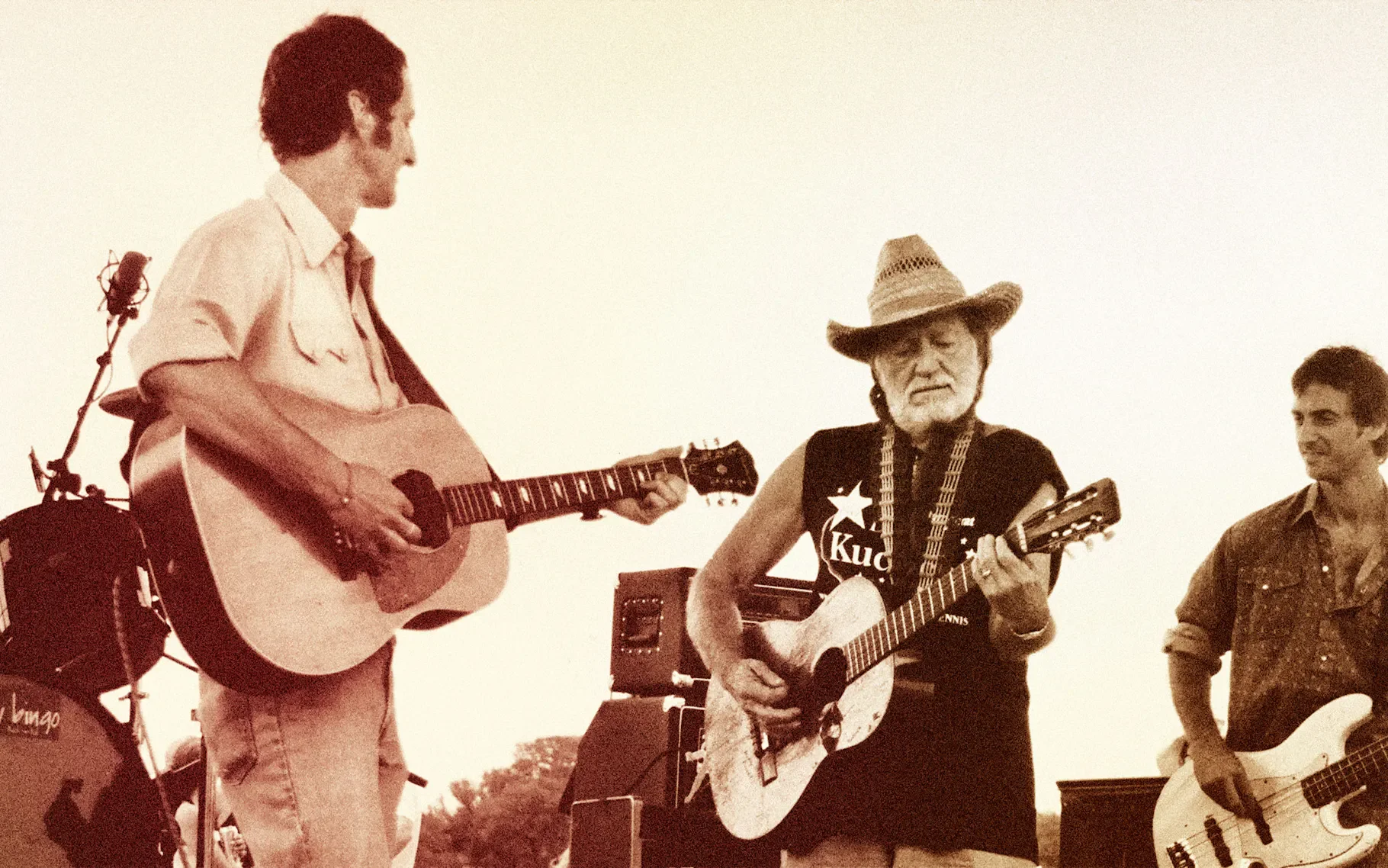
Mark Seliger and Willie Nelson in 2002. (Photo courtesy of Mark Seliger.)
Amarillo-born Mark Seliger was a lonely college freshman at what was then called East Texas State University when he first fell for Willie Nelson’s music. A new girlfriend was visiting Dallas, and he wanted to go see her, so he borrowed his dorm RA’s car for the drive over from Commerce. He found a cassette-tape copy of Stardust sitting on the dashboard and put it into the stereo. When icy roads turned the seventy-mile drive into a slow-rolling, two-hour ordeal, he just kept flipping the tape over, playing it nonstop the whole way—a pattern he repeated on the even longer drive home. He was hooked.
(Read a transcript of this episode below.)
Nearly twenty years later, in 1996, as chief photographer for Rolling Stone—where he’d created iconic images of everyone from Kurt Cobain and Drew Barrymore to Ice-T and Keith Richards—he’d channel that experience, plus the work of Edward S. Curtis, into one of the most powerful photographs ever taken of Willie. This week on One by Willie, Seliger describes the evolution of his fandom and friendship with Willie, plus what you can learn about Willie’s heart from a close look at Trigger and the wonders of playing the famous Fourth of July Picnic with his own country band, Rusty Truck. Spoiler alert: The wondrousness of the Picnic increases exponentially when Willie sits in on your set.
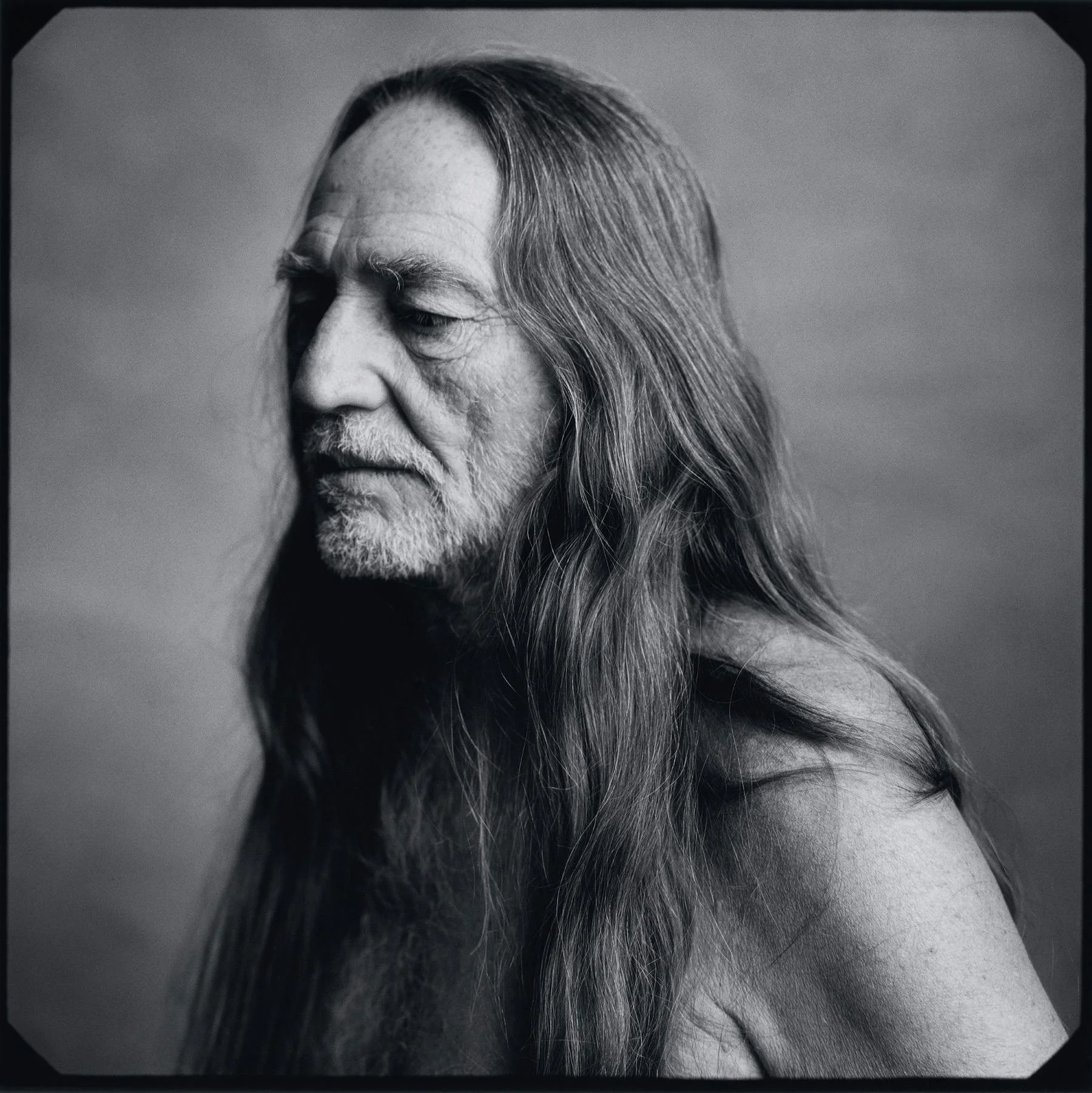
Willie Nelson, 1996. (Photo courtesy of Mark Seliger.)
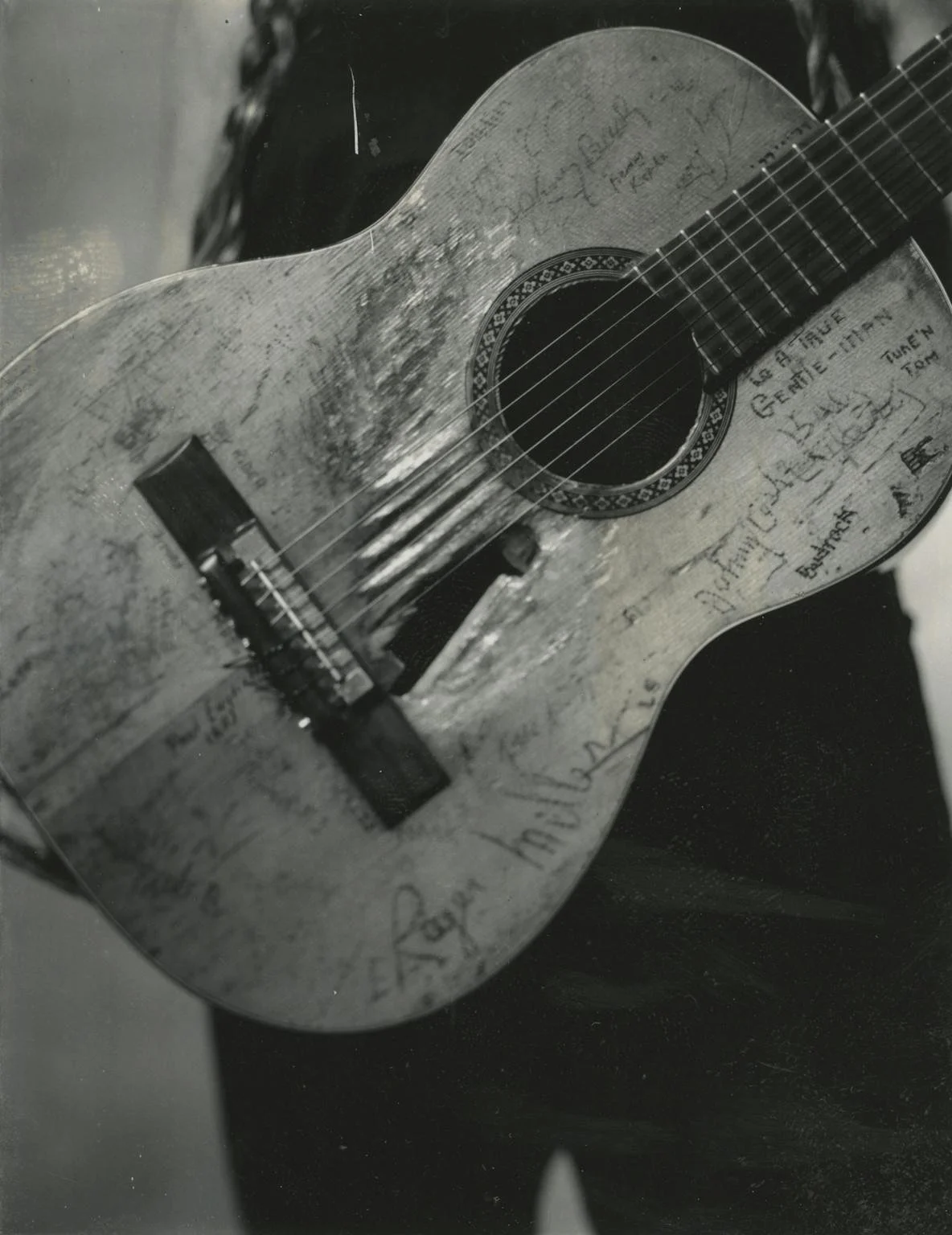
Willie Nelson with Trigger, 2001. (Photo courtesy of Mark Seliger.)
One by Willie is produced by John Spong and PRX, in partnership with Texas Monthly. The PRX production team is Jocelyn Gonzales, Patrick Grant, Pedro Rafael Rosado, and project manager Edwin Ochoa. The Texas Monthly team is engineer Brian Standefer, producer Patrick Michels, and executive producer Megan Creydt, with graphic design by Emily Kimbro and Victoria Millner. And Dominic Welhouse provides invaluable research and editing help.
Transcript
John Spong (voice-over): Hey there, I’m John Spong, and this is One by Willie, a podcast in which I talk each week to one notable Willie Nelson fan about one Willie song that they really love.
This week, we talk to one of the all-time great rock and roll portrait photographers, Amarillo, Texas, native Mark Seliger, about the song and album that first made him a Willie fan, Stardust. Now, back in 1978, Mark was just a college freshman when he found a cassette-tape copy of Stardust sitting on the dashboard of a car he’d borrowed from a buddy. And though it’d be nearly twenty years before he’d work with Willie—and become friends with him and his harmonica player, Mickey Raphael—he says that that original experience with Stardust, and the song itself, have informed just about every photo he’s every shot of Willie.
And that’s where the conversation gets cool. In Mark’s thirty-plus years of shooting celebrities for publications like Vanity Fair and Rolling Stone, he’s created iconic images of everybody from Kurt Cobain and Drew Barrymore to Ice-T and Keith Richards to Barack Obama and the Dalai Lama. But, maybe because of the lasting friendship he built with Willie, Mark’s images of him seem to go a little deeper. He’ll talk about two of those photos with us, and if you want to google them up before you listen, they’re both black and whites, one from 1996, of a shirtless Willie in profile, and a 2001 portrait of Trigger.
Oh, and we end up looking at a third photo, and that one’s different too. It’s of Mark playing guitar with Willie onstage at the 2002 Fourth of July Picnic. That’s because the country band that Mark fronts, Rusty Truck, has been on tour and in the studio with Willie, and the song of Mark’s they cut together, “A Thousand Kisses,” is one of the best Willie songs that I suspect you’ve never heard.
So stay tuned—and let’s do it.
[Willie Nelson performing “Stardust”]
John Spong: So, you’re a big enough Willie fan that it actually took you a whole lot longer to settle on a song to discuss than most of the guests we’ve had. But you landed on “Stardust.” Why does “Stardust” mean so much to you?
Mark Seliger: Well, I mean, for a lot of reasons, and I can start from the beginning, which was the happy accident. I was going to visit a girlfriend—I lived in, I went to college in a very small town in Texas called Commerce, Texas, the home of East Texas State University. And it was a very small school in the Bible Belt of Texas, near the border of Oklahoma. And I had a brand-new girlfriend out of Houston that was visiting her brother in Dallas in my first year. And so I became very friendly with my resident assistant, and I really wanted to go visit my girlfriend in Dallas, and so I asked him if I could borrow his car. And he had this, I don’t know, maybe it was like a Hornet, right? And it had a cassette deck in it, which was something that seemed like a good idea, except for I didn’t have any cassettes.
John Spong: What year is this?
Mark Seliger: This is in 1977? [Correction: Stardust was released in 1978.] So I get in the car and on my way, very thrilled to see my girlfriend. Had been pretty lonely up there. I didn’t know anybody. And as I was driving, the first thing that was on the dashboard that I picked up on was this Willie Nelson cassette. And it was Stardust. And it was kind of a snowy day, pretty icy, which was pretty uncommon in, you know, in Texas weather. So I was driving very slow, and I listened to the record, and I probably had about a two-hour trip getting into Dallas. So it played over and over, and then I listened to it again on my way back. And I was in a pretty melancholy mood on the way back. ’Cause I was, like—I had just seen my girlfriend, Kim, and super excited to spend time with her. And then I was going back to school into this kind of lonely atmosphere, and there was a very, you know, very kind of a soothing moment of listening to Willie sing on that record.
And “Stardust” was—you know how it starts out. And that kind of incredibly soulful voice coming through. It just etched itself in my mind as being this aha moment of listening to somebody that I, maybe I had listened to a little bit on the radio, but I wasn’t really familiar with that record. And I just fell in love with it, and [it] became, you know, a record that I’ve, over the years, have always played. And, you know, different times in my life—it’s helped me through good times and bad times, and I use it as an earmark into my emotional rescue.
John Spong: I love that. I love that. Well, that’s a perfect spot. Will you listen to it with me now?
Mark Seliger: Absolutely.
[Willie Nelson performing “Stardust”]
Mark Seliger: Well, there you go.
John Spong: That’s it, right?
Mark Seliger: That’s a pretty incredible moment listening to that song with you, John. I’ll tell you something, you know—I got a pretty good insider story about the making of that, which I find is the piece of history; aside from the emotional experience for me, I’m always interested in process, you know. So Mickey [Raphael] told me a couple things, and I read a couple things, about the making of that. So that was made at Emmylou Harris’s house in Beverly Hills, where she recorded a lot of her records. And then the Neve console, and you know all the gear that they recorded on, was in a trailer outside the house, and they all recorded live inside the house. And if you really listen to the quality, which is all live, it’s all the musicians playing together, it really feels like you’re in somebody’s living room—which, actually, they were!
John Spong: Sho’ nuff, yeah.
Mark Seliger: They were in somebody’s living room making a record. And the phenomenon about Willie’s career, which is, as we are amazed at how incredibly successful and diverse it is, that was a time when his new record company expected him to put out an outlaw record. And then Red Headed Stranger comes out, which is more of a thematic, almost like an opera, you know, a storyline, and then this—which was American standards and [a] Hoagy Carmichael classic song that he turned into a country, you know, a real country legend. And so, you know, just goes to show you that you got to trust your intuitions and follow your dreams and your passions, and that’s something that Willie, you know, he’s never been shy about doing. He’ll go out of his way to experiment and find things that he loves, and knowing that level of taste and that level of passion, if it’s good for him, it must be good for other people as well. Right?
John Spong: Right. It’s great because it’s just funny—I even think about it. There are people for whom this is the only Willie record they have. I mean, it’s just this universally beloved, inarguably beautiful thing. And it may be the most subversive thing Willie ever did, in so many ways. I was even going to ask—it’s kind of punk rock, just in that . . . [and] one thing that really floors me about it. When I first learned that—because I’ve just always known this record—when I figured out that Booker T. was the producer, I was like, “Wow, that’s amazing.” Booker T. was the first Black producer ever on a major-label country record, and I’ve checked in with some historians—he remains the only one. Other, of course, African American artists have produced their own stuff on major labels, but Booker T. remains the only one that ever did. And any resistance to any of that, or standards—”You can’t do that. Outlaw!”—and Willie just said, “Oh, I can.”
Mark Seliger: Yeah, yeah. He always broke the rules. And that was his mantra.
John Spong: The other thing that struck me when I was thinking about this with you—you just told a discovery story, and we’ve had other guests on here talk about songs off this album, and everybody remembers where they were the first time they heard this record. And even though that’s a cliché, right? But no, Whoopi Goldberg talked about being a single mom in San Diego, and she heard it through the window coming from her neighbor’s house. She didn’t know the neighbor, but she went over and banged on the door and said, “What the hell is this?” And then [she] becomes a fan of this album. And Natalie Mering, who performs as Weyes Blood, who’s a quarter of the age of any of us, she was talking about just being in a cabin in Big Sur one cloudless night, and somebody put this on, and she was like, “What in God’s name?” And she just spent the whole rest of the night looking at the album cover and comparing it to the sky, immersed in this record. And it does that. It does that. And like you said, you come back to it all the time too.
Mark Seliger: But it was also like my first intro into that period of country music. And, you know, that eventually led me to Merle Haggard. That sent me into listening to Tammy Wynette and George Jones and Buck Owens, and listening to the songwriting, where, you know, the double entendres and the incredible wit that came out of the storytelling was—you really had to think about where they were heading with a song, but there was always a little tongue in cheek to it. And I loved that. And married with the most incredible voices—it was just a journey for me. And Willie, that record really was the kick in that direction. So I always think of, like, “Oh, thank God I had a chance to listen to Stardust, ’cause it led me down this great path.”
[Willie Nelson performing “Stardust”]
John Spong: So, you become a Willie fan—and I was going to ask, what’s the evolution of the fandom? So you become a Willie fan in that moment. Do you go forward with Willie music, or do you start buying the old stuff? Where do you go?
Mark Seliger: For me, it was definitely following the trajectory, but it was also—probably why I’m sitting here talking to you today—it was the ability to actually, to work with him professionally. So, being a superfan doesn’t always happen, as a photographer, of your subjects. You know, you’re assigned an artist, and you learn to fall in love with them by their music, if you’re not familiar. So it may not be somebody that you’re familiar with, or may not even be music that you’ll ever listen to again, but you have to give it a chance in order to do your research. So, come the opportunity to work with Willie in ’94 [Correction: 1996], I get the assignment, and, you know, I’m pretty well aware of my subject. I didn’t know the personality that well, but I was just thrilled to be able to meet him and to be able to work with him.
And it was in my studio in New York, and it was on Mercer Street, Mercer and Grand. It was about a 1,700-square-foot loft that I had as an apartment, and then I had part of it sectioned off as my studio. And we set up a very simple backdrop to work with him, and I think we had probably an hour or so to work with him, and [he] came in, and immediately, we started to tell each other jokes. That was our connection. And I realized what a prankster he was, you know. It was like he was—if you know his writing and things, that he says, he’s 50 percent wise man and 50 percent wise guy.
And I just had this great memory of him. We were sharing jokes, and we were both laughing, and then we started working. And I don’t know if you’re familiar with Edward Curtis? The photographer who photographed the Native Americans over the turn of the century—a pretty ambitious project, where he worked for about thirty years with the J. P. Morgan Foundation and tried to really record as much as he possibly could during that evolution, that change, and really the last struggle of the Native Americans going, as the world was changing, and displacement. And he did an incredible job of that. So there’s Willie Nelson sitting in my studio, and I’ve got this very simple background, and I’m using—at that time, I had a Hasselblad camera, and I had a Polaroid on my Hasselblad.
Now, the great thing about this particular Polaroid was that you could actually get a Polaroid, but you’d also get a negative from it, and then you would start taking real pictures with your film. But the Polaroid would give you the security that you knew what the exposure was. It would show you the lighting; you’d do little tweaks. I’d usually keep the negative, even though we wouldn’t print off of that. It was really something that we just collected. And then we would hope that the shoot was as good as the Polaroid.
In this case, the Polaroid was the very first picture, and it was the best picture. And that became the photograph. And so, as we started the session, I asked Willie if he would mind if I did a head-and-shoulders without a shirt on. And I wanted it to feel very raw. His hair was down. I wanted it to feel very raw and very much about the profile of his face, and really without me being aware of it, it was a reflection of what I imagined a Curtis picture would be in a modern world. And with a little help from Curtis, I think we created a pretty—what I consider it to be an original moment with Willie. There wasn’t any stylists, there wasn’t anything particularly going on. It really showed, I think, at that time in his life, like the man who—kind of ageless, but also years of hard work.
John Spong: He . . . I’ve talked to photographers about shooting Willie before, and one of the things I love is—because you guys think visually, obviously. What do you see in his face?
Mark Seliger: It’s hard for me to think of it from that perspective, because I think, you know, the whole picture, for me, is the way I interpret it. And there’s just—it feels like a timeless moment of somebody that you’re familiar with, but yet you’re kind of entering their world. And their world, I think, for the voice and the thoughtfulness behind each line that he sings, emerges from this portrait. You see the artist. And not necessarily from my interpretation, but really a combination of what I could create around him and then him bringing himself into that moment. So it seems like a very, a peaceful, even—there’s a quiet moment to it. There’s—it’s almost like you could be out in the desert and hear the wind blowing around you, you know? It’s just effortless. And I think about the way that he sings and the way he approaches his music, and there’s such an ease and an effortlessness about it that this portrait, for me, was synonymous.
John Spong: As you say all that, and I look at him—and we know him as the performer, we know him as the joke teller, all this kind of stuff—I almost feel like I’m seeing inside him right there. That’s him on the inside that you captured.
Mark Seliger: I always think about Stardust as being the most reductive listening experience—especially that song—that I know. I mean, I can probably on one hand tell you songs that I listened to that have that kind of reductive feeling. And so that, to me, is my favorite Willie moment. And I wanted to be able to interpret that from the music that I was connecting to. So this is a very similar experience, the equivalent of a very reductive portrait. If anything, it should feel like that song.
[Willie Nelson performing “Stardust”]
Mark Seliger: I gotta read you one thing that this sums up, when you think about—I talk about the melancholy and the lonesomeness of the song—now then, we talk about him as the prankster, right? Or the wise guy. So you probably know this quote. “I think youngsters need to start thinking about the kind of world they’re going to leave for me and Keith Richards.”
John Spong: That’s the Willie you know?
Mark Seliger: That’s the Willie I know. I mean, that’s the guy that—you know. Now, when you hear that, you don’t always associate that with the guy that plays Trigger. Which leads us into this picture of Trigger. So, probably a moment where I think I was able to tell a different story, where you actually disassemble what people are expecting and get to the heart of the secondary voice—which is his guitar playing. Nobody plays guitar like that. That is a signature voice. You can call it whatever you want to, but it is absolutely one hundred percent unique and one of a kind. And what’s so cool about the association of that one of a kind–ness is that [it’s] very, very much like this guitar, which is one of a kind, you know? There’s not, you know—there’s not this moment where there’s three or four guitar changes during the show. It’s like, you know, you got the guitar, you got the voice, you’ve got the band, you got the songs. That’s all you need.
John Spong: And with it, I’ve seen other portraits of Trigger, the guitar, and Trigger’s often—almost always—by himself. It’s just the guitar, and there’s a sense that you’re looking at a holy relic, which is accurate, which is a wonderful way to show it. There’s a sense that it’s a museum piece. But what I love about yours—Willie is in the background; you can see the braids, or the guitar strap, or both. This is—they’re partners. It’s a relationship between him and Trigger. They’re both here, only the one partner, Willie, is completely in the background. You just see his torso. He is giving the focus over to this partner that has helped him make this great career.
Mark Seliger: Yeah. And on this particular session, it was, again, a thoughtful moment where we landed. You know, you could see too, by the signatures on the guitar, and very much like the life that he’s lived on his face—through the life that he’s lived that you see in his eyes, and on his face, and in just the freedom that he has with his ability to embrace life and an incredibly long career. Willie has accumulated an amazing amount of people in his world. And he’s inspired a lot of people in his world. But he’s also not afraid—through just the pure visual of looking at this guitar—that he asked for the autograph. He asked for the memory as well. That’s something that a lot of artists probably wouldn’t do, because, you know, they’re too cool for that. But he is obviously somebody who loves the memory.
John Spong: They’re real relationships. And so there’s Roger Miller, and there’s Johnny Cash, there’s these Hall of Famers, but there’s Johnny Bush, who really matters in music history—wrote “Whiskey River”—but is not on Mount Rushmore, necessarily, with these other guys. And then there’s Budrock [Prewitt], who’s been part of the road crew for a long time, and it’s just, this is Willie’s family depicted on Trigger.
Mark Seliger: That’s right. That’s right. That’s right. And it’s very much about Willie’s family, you know. I learned a lot from doing some studying about the Carter family, you know, and the blossoming of how their music was embraced as a family, and how Johnny [Cash] became part of that network, and then they would travel together. And Willie has his family and his picnic, and he has—he’s done his, you know, the hard work, for Farm Aid, and he’s always been there to be, you know, to speak out for, the everyman, and everywoman and everyperson. And, you know, he just really has this light about him, of goodness, and very beloved. And yet he’s also one to reflect that back on the family that he’s loved.
John Spong: Yeah.
[Willie Nelson performing “Stardust”]
Mark Seliger: When I first listened to Stardust, that took me down a road of lonesome music. And when I started writing myself, that’s where my voice went, as a singer-songwriter, was really an affinity for the lonesome sound. And the more lonesome, the better. And so, this picture we’re looking at here, so that’s during the Fourth of July Picnic. So it was [a] pretty funny moment, where probably about a year before, maybe a little less than a year before, I talked [to] Mickey Raphael and Willie to produce one of my songs, called “A Thousand Kisses”—that when I was writing it, you know, I had Willie in my mind in terms of the phrasing and the feeling and the pace of the song. And so Mickey helped me along to get Willie there. And we met down at the studio in Texas—
John Spong: At Willie’s studio? In Pedernales?
Mark Seliger: At Pedernales, yeah. That’s where we did the recording. And Mickey did a lot of the arranging on the song. Bobbie [Nelson] played piano on it, and Willie’s band played on it. And we cut the song in a couple of takes, and then Willie came in and played his parts—he played through the song, and then he sang the parts with me, and then he did a verse. And that led to the making of “A Thousand Kisses,” and it was definitely a highlight for me. So we went on a little tour with him once the record came out; we did the heartland. We did six or seven shows in the heartland with Willie, and had a great time, with my band, Rusty Truck. And then they got invited to come out and play the Picnic a couple months later.
So we got a slot pretty early in the morning on the second day, which meant that, you know, we were one of the first bands up. You had twenty minutes. You had a clock that started off on twenty, and then the light turned—you know, when it started, your twenty minutes started, there was a light in front of you that turned green, and then it went to yellow right as you were supposed to spend about nineteen minutes. And then at twenty minutes, there was a big red light that flashed on and off. So I was very aware that we just had a short period of time. So we did two numbers, and there was probably about, I don’t know, maybe 150 people that were scattered through the fairground. And not too many people were up at our eleven o’clock spot. And [the] third song was “A Thousand Kisses,” so I was already going to go committing suicide onstage by playing a slow song.
And then I’m playing—about halfway through the song, I see people running to the stage, and I’m just going, “Wow, I am finally connecting with this audience.” And then more people gather up, and there’s maybe three hundred people now, standing right in front of me. And I’m playing, and I’m really just pouring my heart into it. And then I look over to the side, because my guitar player, Michael Duff, was pointing over to the side, and I look over to the side, and there’s Willie Nelson playing guitar. And he did his lead, which was just beautiful, and he sang the last chorus with me; we harmonized. And that was what that picture was from. So you think of life as a photographer, you’re going to have—collect a lot of beautiful memories, but I have to say that’s right up there with just some of the best ones.
John Spong: I will confess that when y’all sent me a copy of the song, part of me went, “Oh, what’s this going to—,” because I don’t know Rusty Truck. I’ve not heard your band before. And I was like, “Oh, wow. How is this going to go?” And then I listened, and it’s such a great song, and Willie’s guitar in it, and you’re singing on it. I actually hear—when you said a second ago that it was his phrasing that was in your mind, and his sense of how to tell a story in how you wrote it, I hear all that, but then it’s just objectively a great song, and a great recording.
Mark Seliger: Thank you.
John Spong: And the guy that I work with on this, Dominic, who helps with all the research and everything—he’s a bigger nerd than me. And he’s like, “This just lives on the internet somewhere? This is fantastic.” It’s just great.
[Mark Seliger and Willie Nelson performing “A Thousand Kisses”]
John Spong: When you’re on tour with Willie, I suspect you’re on the bus some?
Mark Seliger: Yeah. I mean, we went on the bus a couple of times. You know, it’s like, you walk on the bus, and it is like a waft of beautiful aromas. But it’s like, the secondhand effect was not exactly good for my onstage performance, so I’d have to vary my visitation rights on the bus. But I really enjoyed spending time with him on the same stage. It was pretty fun. And he was a very gracious—he had a very gracious way about him. In fact, I think the funny thing about—I remember a very funny moment where I walked on the bus with Mickey to say hi as we started this heartland tour, and Willie looked over at me and said, “Hey, Mark.” He goes, “You done this before?” And I thought, “Well, there’s a guy who—he’s a pretty brave soul to put somebody in the middle of the stage for the first time to open up his show and doesn’t really know if he’s sure he knows what he’s doing.” Right? Wow.
But fortunately, we had had some pretty great shows back in New York and in L.A., and I was comfortable, but it was amazing. I mean, we were in—I remember being in the middle of the heartland. We were in Kansas; I believe it was a really small little town in Kansas. And we got out onstage, and there was probably, I don’t know, maybe 7,500 people sitting in their folding chairs, and [holding] koozies of beer, and hanging out, watching the sun go down in the middle of this town square. And we get up onstage, and probably the most beautiful sunlight, sunset, that you can imagine, and played. And everybody just enjoyed the show. You could tell people were thirsty for music. And then I got to see Willie play an incredible set under the same situation. So it was a night to be remembered.
John Spong: I mean, I love all this. And it’s kinda wild to think, to realize, that all of this is informed by that first encounter with Stardust, almost fifty years ago?
Mark Seliger: Yeah, no—I mean, John, you gave me a pretty tough challenge to find the song that really made sense. But I always come back to the first experience with something. It’s like the first time I saw Starry Night with Vincent van Gogh, at the Museum of Modern Art, when I just moved to New York City, or the first time I got to see Ella Fitzgerald at Radio City, when I first moved to New York, or the first time I saw Baryshnikov perform. Those are the moments in art that are etched in your memory. And because of that memory, you can’t help but put them on the front of the menu.
John Spong: Yeah. We’re different people after those experiences.
Mark Seliger: Yeah.
[Willie Nelson performing “Stardust”]
John Spong (voice-over): All right, Willie fans. That was Mark Seliger, talking about “Stardust.” A huge thanks to him for coming on the show, and a big thanks to you for tuning in. If you dig the show, please subscribe, maybe tell a couple friends, and visit our page wherever you get your podcasts and give us some stars or type in some comments. Every little bit of that helps more than you know.
Please follow us on Instagram at @onebywillie—all one word—find us on Bluesky, and join our ever-expanding Willie conversation at the One by Willie group on Facebook.
I’m your host, John Spong. Thanks for listening.